
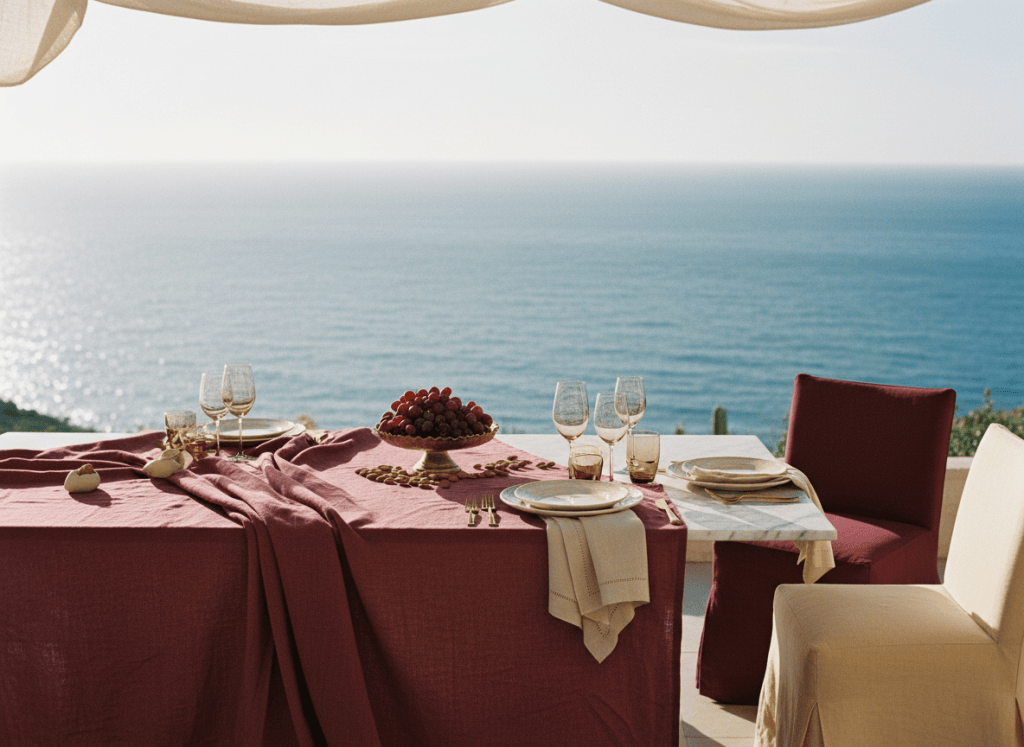
The modern dining room has become one of the most expressive spaces in hospitality. A restaurant can now communicate its identity before the first dish reaches the table, through architecture, lighting, music, materials and the rhythm of the room itself.
For premium restaurants, this creates an interesting challenge. The experience needs to feel distinctive without becoming overly designed. The most successful dining rooms understand that atmosphere should support the food rather than compete with it.
Designing a Sense of Place
Natural materials, considered lighting and a strong relationship with the surrounding destination can give a restaurant a sense of identity. A dining room in a historic city should not necessarily look like one in a contemporary resort. Context matters.
This is where hospitality storytelling becomes particularly valuable. The details of a restaurant can become part of its editorial language, from the origin of ingredients to the visual identity of the menu and the way the team introduces each course.
Beyond the Photograph
Restaurants are also increasingly judged through images before guests ever arrive. A beautifully photographed dining room can create curiosity, but the strongest visual identities go further. They create recognition.
A particular colour, a distinctive table setting, a dramatic bar, an architectural detail or a recurring visual motif can become associated with the restaurant itself. Consistency gives the brand a memory.
The Experience Is the Story
Ultimately, the modern dining room works best when every element feels connected. Food, service, design and communication should tell the same story without repeating themselves.
That is the difference between a restaurant that photographs beautifully and one that becomes genuinely memorable. The image invites the guest in. The experience gives them a reason to return.

