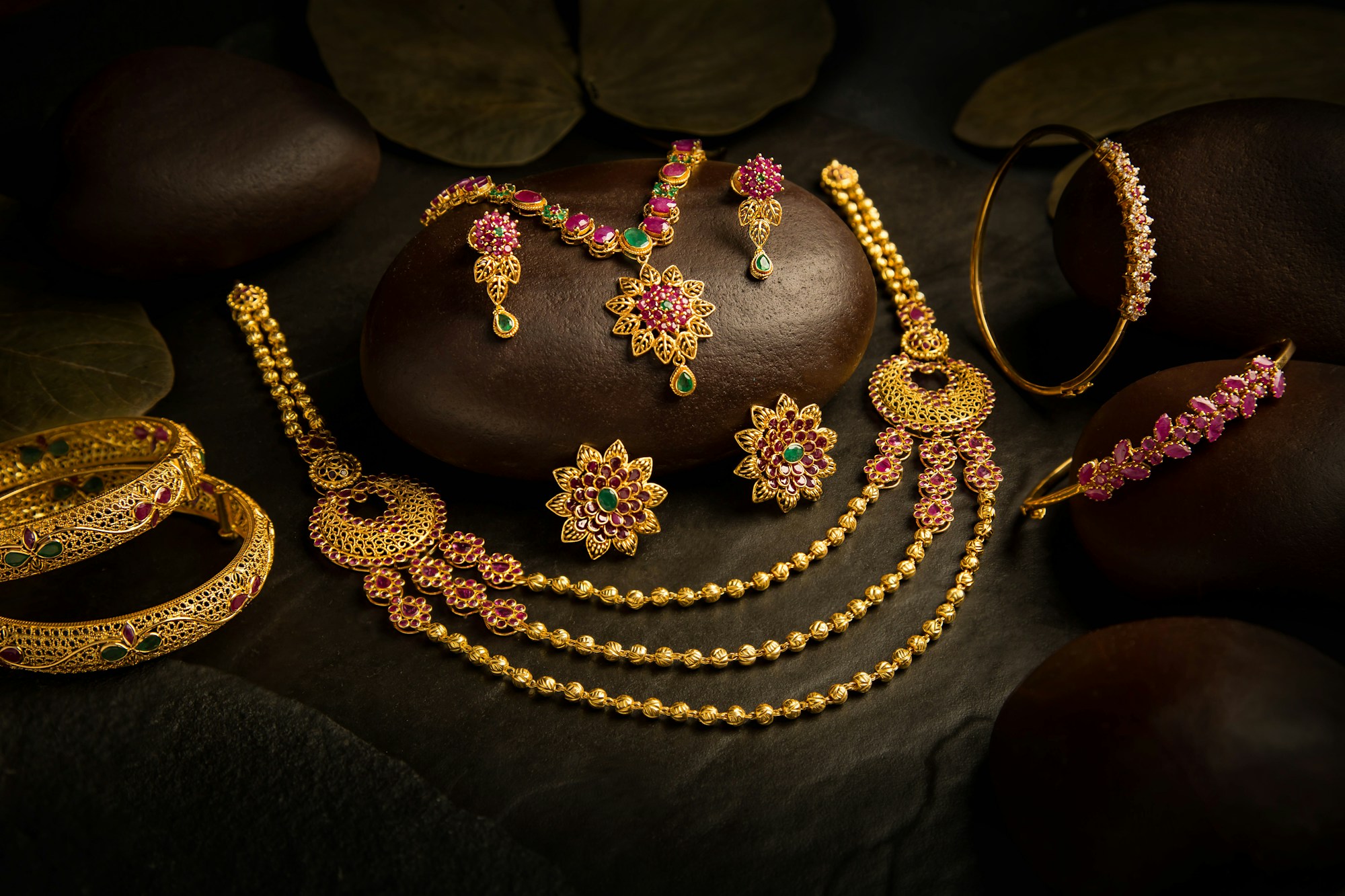
Hold a piece of Portuguese filigree up to the light and it seems to dissolve into air. Fine threads of gold or silver, twisted and curled into spirals and scrolls, form hearts, flowers and pendants so delicate they look woven rather than worked. In the north of Portugal, this jewelry is more than ornament: it is heritage, dowry, devotion and a quiet form of luxury passed from one generation to the next.
An Ancient Technique
Filigree is one of the oldest jewelry techniques in the world, and in Portugal it has been refined over centuries. The craft begins with precious metal drawn into wire so fine it is barely visible. Artisans twist pairs of threads together, flatten them, then shape them by hand into tiny coils that fill a delicate frame. Each element is soldered into place with extraordinary precision. A single piece can require many hours of patient work at the bench.
Where It Is Made
Two towns in the north are especially associated with the craft. Gondomar, close to Porto, has long been one of the country’s great centers of goldsmithing, with workshops that have passed skills through families for generations. Póvoa de Lanhoso, in the Minho near Braga, is equally celebrated, and its workshops and museum spaces help visitors understand how the pieces are made. Seeing an artisan at work is the best way to appreciate why genuine filigree is so prized.
The Heart of Viana
The most famous filigree motif is the coração de Viana, the heart of Viana, a stylized heart crowned with a flame and filled with intricate scrollwork. It is closely linked to Viana do Castelo, where women traditionally wear layers of gold necklaces, hearts and beads with regional costume. The sight is at its most spectacular during the city’s great summer festival in honor of Nossa Senhora da Agonia, when the streets shimmer with gold. Other traditional forms include delicate earrings, crosses, and pendants shaped like flowers and religious symbols.
A Modern Renaissance
In recent years a new generation of Portuguese designers has reinterpreted filigree for contemporary wardrobes: lighter pieces, minimalist forms, mixed metals and modern settings that still rely on the same hand techniques. The result is jewelry that feels both deeply rooted and entirely current, and that appeals to collectors who value craftsmanship and provenance as much as carat weight.
How to Buy Well
Portugal has a long-established system of official hallmarking for precious metals, and authentic gold and silver pieces should carry the appropriate marks. Buy from established jewelers or directly from workshops, ask about the metal, its purity and whether the piece is handmade, and request documentation for significant purchases. Genuine handmade filigree has a slight irregularity and depth that machine-made imitations lack. Store pieces carefully, as the fine threads can bend, and clean them gently.
A Souvenir With Meaning
Few objects capture the soul of northern Portugal as completely as a filigree heart. It speaks of patience, family and faith, and of a culture that has always found beauty in the smallest details. For travelers seeking something more lasting than a photograph, it is the most graceful way to carry Portugal home.