Lisbon rewards the traveler who chooses a base with intention. The city rises over seven hills toward the Tagus, and each neighborhood keeps its own tempo: one measured in church bells and fado, another in bookshops and coffee, a third in leafy squares and long lunches. Three of the most compelling addresses are Alfama, Chiado and Príncipe Real. Here is how they differ, and how to decide which suits the journey you have in mind.
Alfama: the oldest Lisbon, best explored slowly

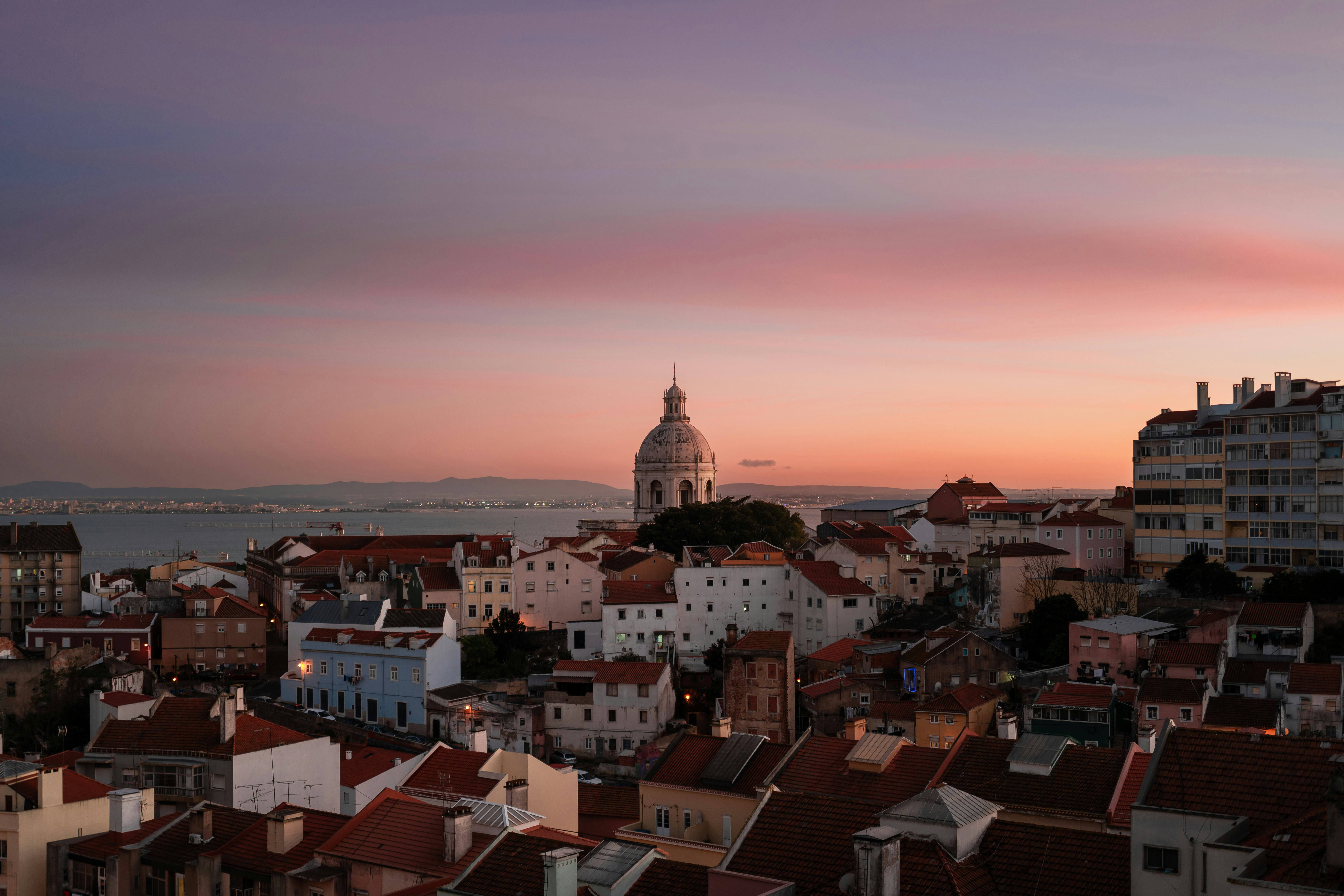
The rewards are in the details. Miradouro de Santa Luzia opens onto the rooftops and the river, while the square at Portas do Sol offers outdoor cafés and a higher lookout close by. After sunset, the neighborhood’s restaurants and fado houses come alive, with the Portuguese guitar carrying through the lanes. Stay in Alfama if you want atmosphere, history on the doorstep and the pleasure of wandering without a plan. Travelers who prefer easy, level strolling may find the gradients part of the adventure.
At Santa Luzia, look for the decorative tile panels on the café and kiosk, painted by António Quaresma. They show Praça do Comércio as it appeared before the earthquake and the capture of the castle from the Moors, so a single glance back and forth between panel and skyline becomes a lesson in the city’s memory. The church domes spread below help with orientation: the dome of Santa Engrácia, the church of Santo Estêvão and the two towers of São Miguel, with the Tagus gleaming behind them. Trams pass nearby, ringing their bells.
Chiado: literary elegance at the city’s center
Chiado is the choice for those who like to step out of the hotel into culture. Rua Garrett is home to A Brasileira, a café that has served coffee since 1905, with a bronze statue of Fernando Pessoa seated at an outdoor table. Nearby, Livraria Bertrand, founded in 1732, is recognized by Guinness as the world’s oldest operating bookstore, and it survived the 1755 earthquake.
History is woven into the streets here. The ruins of the Carmo Convent, whose roof fell in the 1755 earthquake, now house the Carmo Archaeological Museum and make a poetic place to pause. Chiado also sits close to Baixa, Rua Augusta and Praça do Comércio, with metro stops and rail connections nearby for day trips to Sintra and Cascais from Rossio and Cais do Sodré. It is an ideal base for a first visit, when convenience and a sense of occasion matter equally. As in much of Lisbon, the streets slope, so comfortable shoes are a good companion.
The district has known loss and renewal. A fire that began on 25 August 1988 spread through eighteen buildings, and the architect Álvaro Siza Vieira oversaw the reconstruction that followed, restoring facades and rebuilding interiors over the next decade. Today the quarter also holds the Teatro Nacional de São Carlos, Lisbon’s opera house, inaugurated in 1792, and the Museu do Chiado, set in the former Convent of Saint Francis. An evening at the opera followed by a late coffee on Rua Garrett is a very Lisbon way to close the day.
Príncipe Real: leafy, refined and residential
Higher up, Príncipe Real offers a calmer, more residential rhythm. At its heart lies the Jardim do Príncipe Real, a garden shaded by centuries-old cedar trees, where a weekly organic market and a Saturday antique market add color. Beneath the garden, the Reservatório da Patriarcal, part of Lisbon’s historic aqueduct system, can be visited on guided tours.
The garden itself was laid out in 1863, and its great parasol-shaped cedar is where couples sit, older neighbors play cards and children gather at the small playground. The reservoir below was completed in 1864 as part of a distribution network designed in 1856 by the French engineer Louis-Charles Mary, and its octagonal plan echoes the shape of the lake above. Facing the garden, the Palacete Ribeiro da Cunha, built in 1877 with a Moorish-style exterior, adds a touch of fantasy to the square.
The neighborhood is known for design and considered shopping. Embaixada, a concept store set in a 19th-century palace, showcases Portuguese designers and artisans. Café terraces, wine bars and relaxed dining fill the evenings, and the Miradouro de São Pedro de Alcântara, with views toward the Tagus and Castelo de São Jorge, is a short walk away. Choose Príncipe Real if you value quiet mornings, boutique browsing and a more local feel, with Baixa and Chiado reachable by metro or on foot.
How to choose
Think of the three as three moods. Alfama is for the romantic, the historian and the lover of fado. Chiado is for first-time visitors who want culture, cafés and connections within reach. Príncipe Real is for the traveler who prefers garden light, design shops and unhurried evenings. Many guests happily combine them, spending a night or two in the old quarter before settling into the elegance of the upper town.
Opening hours, tour schedules and market days can change, so please confirm details directly with each venue before you go.