Central Portugal holds a quietly restorative pairing: a small spring town and an ancient forest, only minutes apart. Luso and Buçaco, north of Coimbra, offer the kind of wellness escape that has little to do with spectacle and everything to do with water, shade and slow walking. For travelers drawn to Portugal’s thermal heritage, it is a rewarding place to linger.
Luso, the town of the spring
Luso is a small town just north of Coimbra, and its name will be familiar to many visitors: it is the source of Luso, the most popular bottled water brand in Portugal. The settlement is of considerable age and was already recorded when Coimbra was taken by Christian forces in 1064. In the mid-nineteenth century, as industrialization made the old water mills obsolete, the arrival of rail travel helped turn the town into a place of leisure and tourism.
Today the town retains its spa character. A thermal spa stands over the spring, offering the traditional pleasures of taking the waters in a gentle, unhurried setting. As with other Portuguese thermal towns, the appeal lies in the atmosphere: tree-lined streets, a measured pace and the sense that nobody is in a hurry.
The Buçaco National Forest
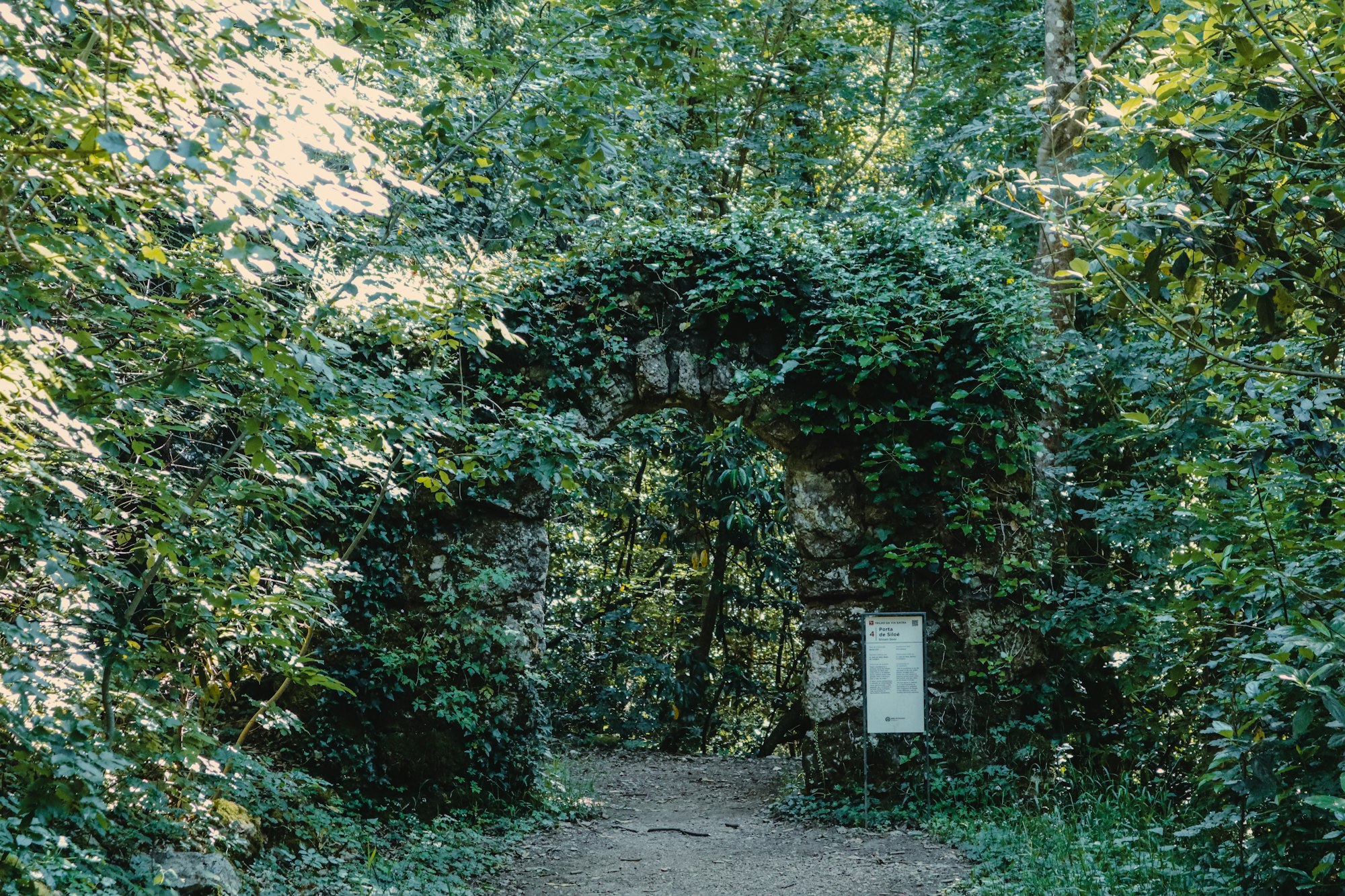
Just beyond Luso lies the Mata Nacional do Buçaco, a walled forest with a perimeter wall of about five kilometers. Within it grow more than 250 species of trees and shrubs, many of them brought from abroad, and the forest is known for its own microclimate and unusually generous rainfall, which keeps the woodland lush. Hot spring baths on the mountain were first described in 1726, and the forest is crossed by thematic trails, including a Way of the Cross that leads to Cruz Alta, the highest point.
Walking here is its own form of wellness. Fountains, staircases and shaded paths invite a slow pace, and the Escadaria da Fonte Fria, a staircase named for the Cold Fountain, is a favorite stop for visitors who enjoy architecture set into nature.
The forest owes its character to the Discalced Carmelites, who built the Santa Cruz Convent here in 1628 as the only “Desert” of their order in Portugal, a retreat modeled on Jerusalem. Their care for the trees was formal as well as devout: in 1643 Pope Urban VIII issued a decree forbidding the felling of trees within the Desert, and the order’s own rules required the prior to plant new trees every year. When the monasteries were dissolved in 1834 and the friars departed, the property was not auctioned but passed to the forestry administration, which added exotic species and new paths in the Romantic spirit of the age.
The emblem of the woodland is the Cedro do Bussaco, a cypress known botanically as Cupressus lusitanica, native to the mountains of Mexico and Guatemala. Beneath the canopy grow tree ferns, orchids, mosses and a camellia collection donated in 1894 by the Count of Vilar d’Allen. The area receives about 1,500 millimeters of rain a year, and fog drifts in often, especially in summer and autumn, which softens the light among the trunks and makes a walk here feel faintly enchanted. The Way of the Cross, with its chapels and sculptures, has been compared to the Sacro Monte sanctuaries of Italy, which tells you something of the care that went into the paths.
The palace hotel and a chapter of history
At the heart of the forest stands the Palace Hotel do Buçaco. It was first planned as a royal residence on the site of the Santa Cruz Convent in the late nineteenth century, though the plans changed as the monarchy neared its end, and it was completed as a hotel in the Neo-Manueline style. Religious, floral and seafaring motifs decorate the building, and many of its interior walls carry azulejo panels illustrating Portuguese literature and history.
The architect Luigi Manini designed the building, and construction began around 1888, with later hands including José Alexandre Soares and Joaquim Norte Júnior continuing the work, and a partial redesign and an extension followed in the 1920s. Portugal has placed the whole Buçaco landscape on its tentative list for UNESCO World Heritage, recognizing the forest, convent and palace as one cultural landscape.
The forest also bears the memory of the Battle of Buçaco on 27 September 1810, when Portuguese and British forces held the ridge against a larger French army during the Napoleonic invasions. A small museum nearby, a short walk from the Queen’s Gate, displays artifacts from the period.
How to spend a restorative day
A thoughtful itinerary might begin with a morning walk among the trees, continue with a spa visit in Luso, and end with a quiet afternoon exploring the palace hotel’s architecture. Combine it with a stay in Coimbra, or turn it into a night or two of its own, and let the forest set the pace.
Please confirm opening hours, treatments and access with each venue before you visit. This article is for general interest and is not medical advice; speak with a qualified professional about any health concerns before choosing a spa treatment.