
Ask five people where to eat in Singapore and you will hear five different answers, each of them right. The city’s appetite stretches from rice cooked slowly in a sealed pot to beef seared over hardwood charcoal, and these five restaurants sketch that range with real clarity.
That breadth has deep roots. In 2020, UNESCO added Singapore’s hawker culture to its Representative List of the Intangible Cultural Heritage of Humanity, describing hawker centers as community dining rooms where people from different backgrounds share meals and where Chinese, Malay, Indian and other influences are adapted to local tastes. A city that eats this way tends to produce restaurants of real personality, and the five below show it.
A Feast Built on Patience
At 11 Chander Road, Mr Biryani is the relaxed place to settle in for a generous spread. The house signature is the Hyderabadi Chicken Dhum Biryani, in which the rice cooks slowly alongside the meat and absorbs its spices. Mutton, fish, prawn and vegetarian versions are also on offer, and the table fills out with garlic naan, Butter Chicken Masala and Gobi Manchurian.
Hyderabadi biryani comes from Hyderabad in India and joins Hyderabadi and Mughlai cooking. In the traditional kachchi method, raw marinated meat is layered at the bottom of a pot with basmati rice and cooked in dum style after the pot is sealed with dough, a process that depends on careful control of timing and temperature. Saffron, cinnamon, cloves, cardamom and fried onion perfume the rice, and cooling raita and a chili-based side dish called mirchi ka salan are the usual companions. Local folklore credits the Nizam’s chef, though the exact origin is uncertain.
An American Classic at Marina Bay Sands
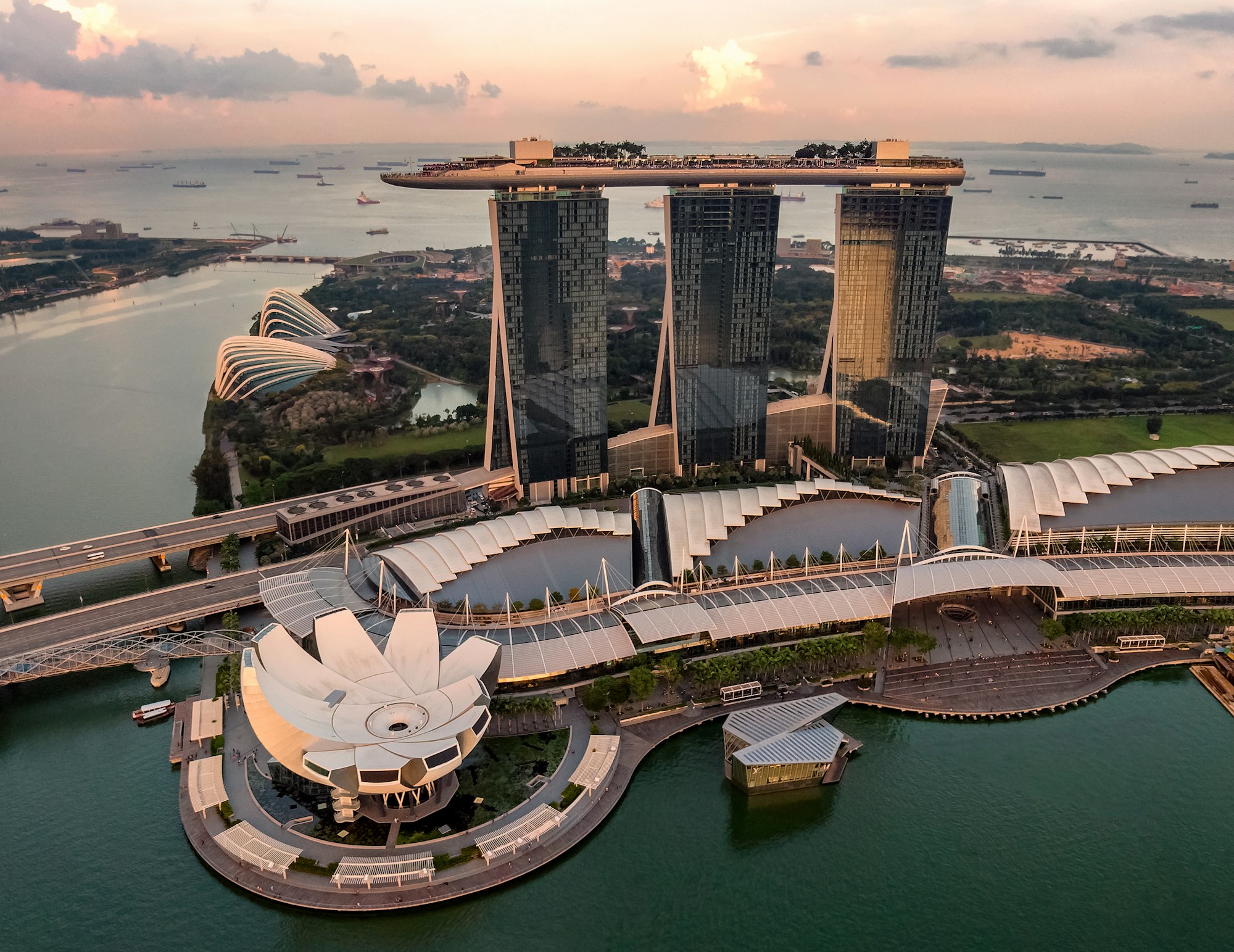
For an evening of indulgence, CUT by Wolfgang Puck brings the classic American steakhouse to Marina Bay Sands. Premium cuts, precise preparation and polished service unfold in an elegant room, which makes it a natural choice for a celebration or a long, unhurried dinner.
Marina Bay Sands opened in 2010, with its casino soft-opening on 27 April and the resort officially opening on 23 June, and its full complex held a grand opening in February 2011. Designed by architect Moshe Safdie, it comprises three hotel towers of 55 storeys each, linked at the top by the 1.2-hectare SkyPark, which holds an infinity pool and a public observation deck with 360-degree views. Alongside CUT, the resort has been home to restaurants by other celebrated chefs, among them Gordon Ramsay, Tetsuya Wakuda and Daniel Boulud.
Small Rooms, Considered Ideas
Tucked behind 808 Eating House in Joo Chiat, Province seats just eight guests. Chef Law Jia Jun draws on Singaporean, Teochew and Peranakan heritage, working with local and regional produce, seasonal ingredients and thoughtful technique, then presenting it all in a contemporary way. The intimacy is part of the point.
Joo Chiat is a fitting neighborhood for such a table. The residential conservation area in the Katong district on Singapore’s east coast takes its name from Chew Joo Chiat, a Peranakan-descended businessman whose land was divided into lots for Peranakan shophouses. In 2011 the area was declared Singapore’s first Heritage Town, partly for its promotion of Peranakan culture. Teochew cooking, which came to Southeast Asia from the Chaoshan region of eastern Guangdong, is known for light seasoning that relies on fresh, high-quality ingredients, and for steaming, poaching and braising with little oil. The neighborhood’s food scene is lively too: Red House Bakery and Chin Mee Chin Confectionery are among its well-known eateries, and a multicultural dining scene has grown there since 2014.
Quenino, at Artyzen Singapore, takes a broader view of the region. Its contemporary Southeast Asian cooking is led by Chef de Cuisine Sujatha Asokan, with culinary vision from Victor Liong. Familiar flavors are reworked with modern techniques and careful plating, and the setting feels elevated while keeping a firm sense of place.
Fire and Ease Near Kampong Glam
J Bistro sits between Kampong Glam and Jalan Besar and offers a relaxed alternative to tasting menus and formal dining. A KOPA hardwood charcoal oven gives its grilled dishes a smoky character, and the menu ranges across Wagyu burgers, steaks, seafood, pasta, Asian dishes and plates meant for sharing. With contemporary interiors and an easygoing mood, it suits friends getting together or a casual date.
The Common Thread
Heritage, craft and comfort show up in different proportions at each table, yet all five reward curiosity. Together they offer a useful map for anyone planning a few days of eating well in Singapore.
A sensible plan is to treat the five as chapters rather than a checklist. Begin with a long, fragrant biryani lunch, save the steakhouse for a night of celebration, reserve the small counter for an evening when conversation matters most, and keep the charcoal oven for a relaxed table with friends. Reservations and menus change, and small rooms in particular fill quickly, so confirm details directly with each restaurant before you go.