
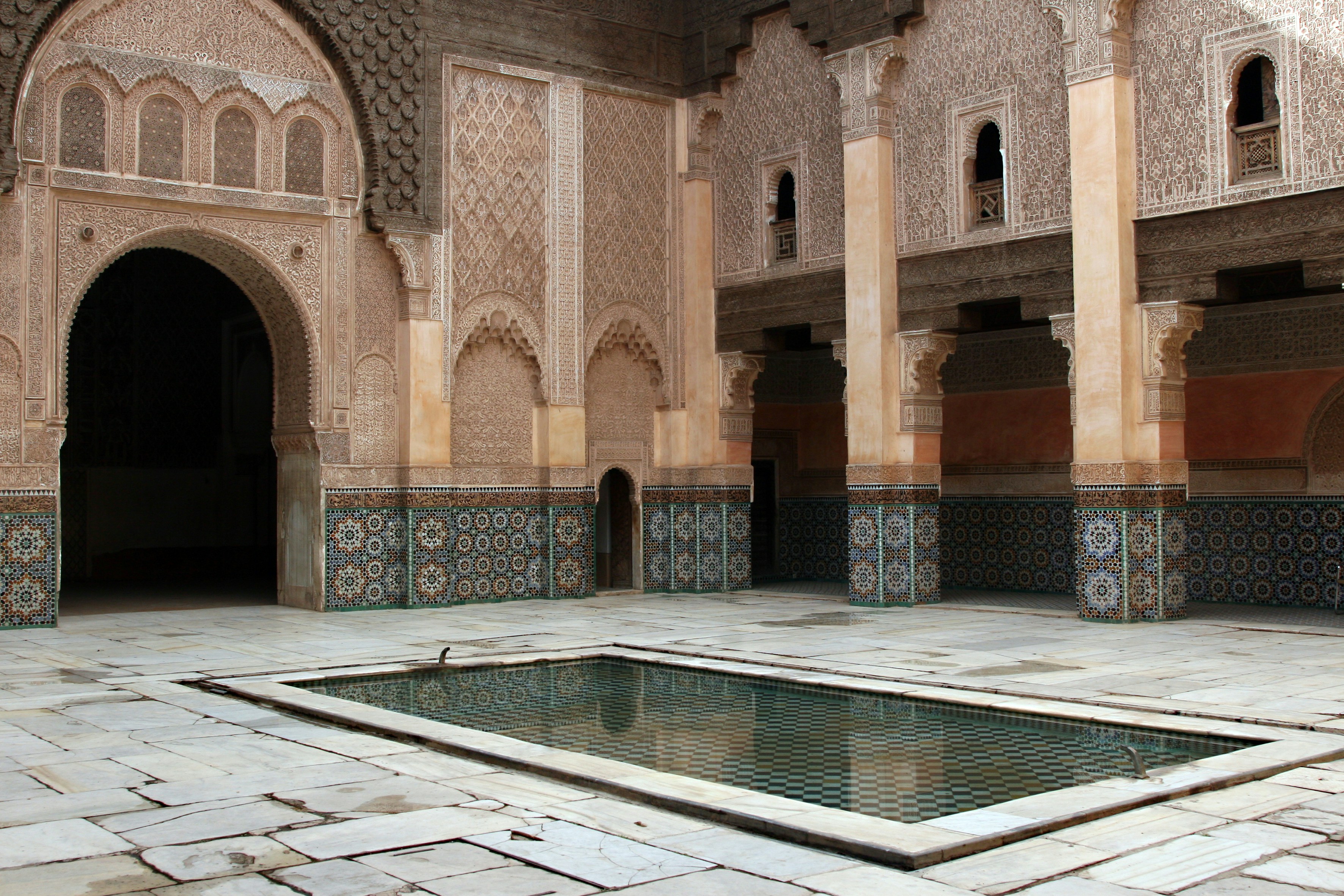
Long before the modern spa, there was the hammam. In Morocco, this steam bathing tradition is both a ritual of cleansing and a place to gather, and it remains one of the most evocative experiences a visit to Marrakech can offer. Understanding how it unfolds makes the experience all the more rewarding.
A Tradition Rooted in Community
The community hammam has long been an important part of Moroccan society. Beyond bathing, it is a social gathering place where friends and family reconnect, during the bathing circuit and afterward over mint tea. Leading Hotels of the World notes that three generations of a family often bathe together. According to Ryo, the tradition traces back to Roman baths, which Arabs transformed into Moorish baths after the seventh-century conquest of the region, and Marrakech’s hammams became community gathering places after the city was founded in the eleventh century.
A Bath With Roman Roots
The architecture of the hammam tells the same story. Hammams descend from the Roman thermae, and the classic plan moves from an undressing room through a cold room and a warm room to a hot room, echoing the Roman sequence of apodyterium, frigidarium, tepidarium and caldarium. Bathers progress from cooler spaces to progressively hotter ones, and the hot room is often crowned by a dome or vault pierced with tiny skylights that let in daylight and release the steam.
Moroccan hammams tend to be smaller than their Roman and Byzantine ancestors and are often located near mosques, where they once served ablutions as well as bathing. Their entrances are discreet and their facades usually windowless, a reflection of the private nature of what happens inside. Many historic examples still serve residents of the old medinas, notably in Fez and Marrakech.
Behind the walls, the heat traditionally came from a wood-fired furnace in a service area below the level of the hot room. It warmed water in a large cauldron and sent hot air and smoke through channels beneath the floor, a system inherited from Roman builders. The fires burned throughout opening hours, and in Morocco some hammams also burned wood shavings and olive pits.
How the Ritual Unfolds
Ryo describes a typical sequence. Guests begin in a tepid room to adjust to the humidity, then move to a hot steam room. Savon beldi, the traditional black soap, is applied and left on for 10 to 15 minutes. An attendant then uses a kessa glove to exfoliate. Some establishments offer a rhassoul mask, made with clay from the Middle Atlas, before a warm and then cool rinse, often followed by argan oil. Common ingredients in traditional hammams include olive-based black soap, rhassoul clay, and eucalyptus and orange blossom essences.
The kessa itself is a rough mitt, and the scrubbing mitten is one of the details that has survived from Roman times. Bathers typically wash under running water rather than immersing themselves, in keeping with Islamic practice, which gives the experience its distinctive rhythm of heat, scrubbing and rinsing.
From Public Bathhouse to Palace Spa
Marrakech offers a range of experiences. Traditional public hammams are centuries old and mostly used by locals; guests generally bring their own towels and products. Hammam Mouassine, in the medina, is described by Ryo as the city’s oldest, founded in 1562. At the other end of the spectrum, hotel spas offer private rituals. At Spa Royal Mansour Marrakech, a private hammam serves one to six bathers and includes a black soap balm, a scrub with a traditional kessa mitt, a body mask and a dip in a cold plunge pool.
The City Around the Steam
The city that surrounds these baths is part of the pleasure. Marrakech was founded around 1070 as the capital of the Almoravid dynasty, and it is nicknamed the Red City for the orange-red clay and chalk of its ramparts. Those walls run for roughly 19 kilometers around the medina, with 20 gates and 200 towers, and the Medina of Marrakech was inscribed as a UNESCO World Heritage Site in 1985.
At the heart of the medina lies Jemaa el-Fnaa, one of the best-known squares in Africa, and nearby the minaret of the Koutoubia Mosque rises 77 meters, the tallest in the city. After the quiet of the hammam, a stroll in the soft evening light toward either landmark is a natural way to extend the sense of calm.
Etiquette for the Thoughtful Guest
Men and women are generally separated, with separate time slots or spaces, so check schedules before you go. Keep conversation quiet and leave phones behind, as they are generally prohibited in treatment areas. Tell staff your preferences, such as the intensity of the treatment. Underwear or swimwear is generally accepted and recommended for foreign visitors. Drink enough water beforehand, and avoid heavy meals for about two hours before.
A Note Before You Go
Prices, schedules and offerings vary by venue and change over time, so please confirm details directly with each hammam or spa. This article is for general interest only and is not medical advice; guests with health concerns should consult a qualified professional before any heat or spa treatment.


