Autumn in the Douro has a rhythm all its own. Terraced vineyards turn gold and copper above the river, and across the valley the harvest, known in Portuguese as the vindima, shapes the days. For travelers who prefer a destination with a sense of purpose, few seasons in Europe are more rewarding.
An old wine region, a living landscape
The Douro is described as the oldest demarcated wine region in the world, and the valley’s terraces and nearby UNESCO World Heritage sites give a visit real depth. The landscape is best taken slowly, by river, by road or on foot between estates, with the light changing hour by hour.
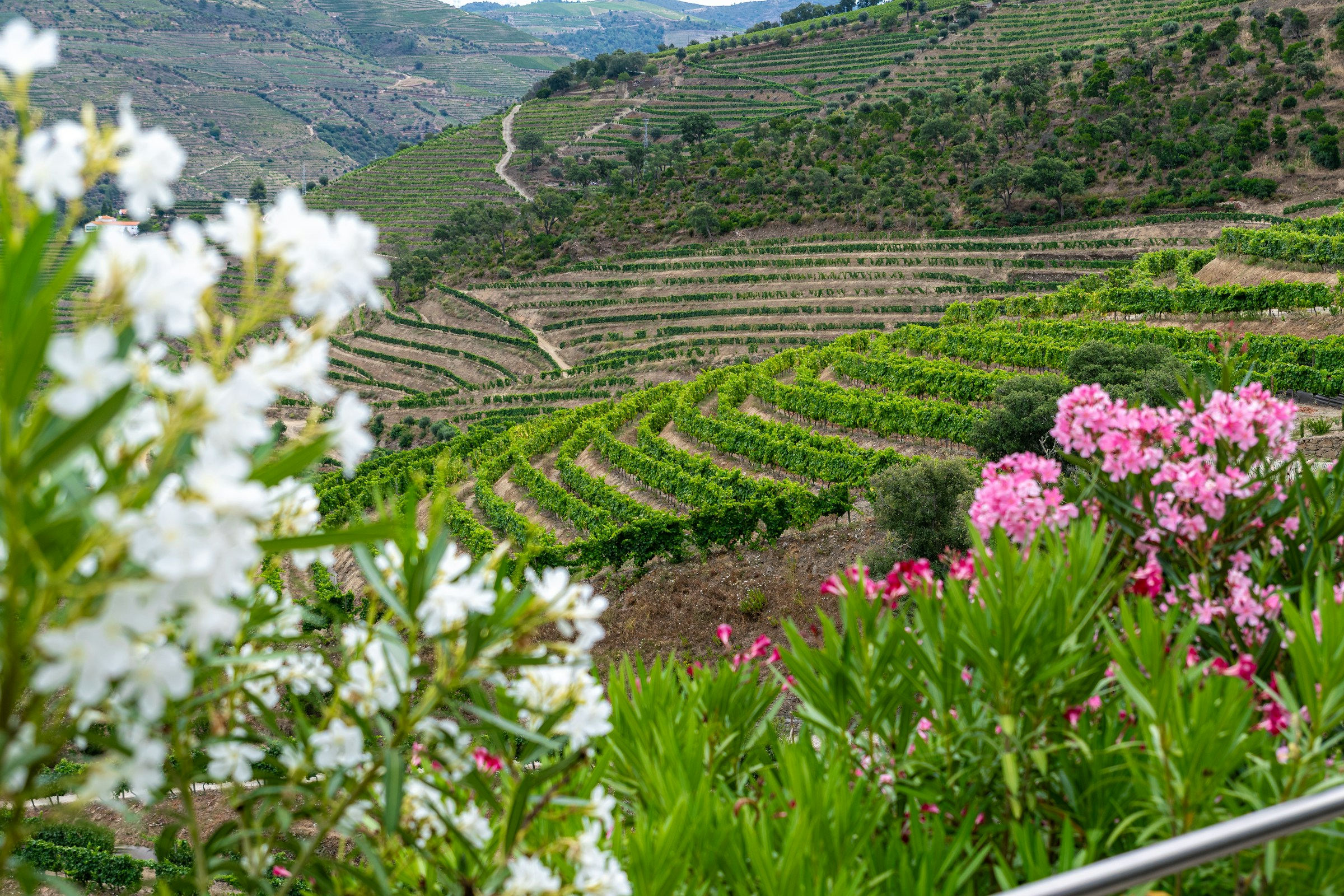
The Alto Douro Wine Region was inscribed by UNESCO in 2001, and the listing recognizes a living cultural landscape of some 24,600 hectares. Winemaking here is believed to stretch back roughly two thousand years, and the rules governing port wine have been defined since 1756. The vineyards climb steep slopes on terraces: the earliest were narrow, irregular socalcos held up by schist stone walls, and after the phylloxera blight of the nineteenth century the slopes were rebuilt with longer, wider terraces that tilt gently to catch the sun.
The scenery is more varied than a single postcard suggests. The Douro and its tributaries, among them the Varosa, Corgo, Távora, Torto and Pinhão, run through mountainous country sheltered from Atlantic winds by the Marão and Montemuro ranges. Between the vines you will find orange groves, white-walled villages and small eighteenth-century parish churches, and the quintas, the wine estates, each with a main house gathered close to its farm buildings and winery.
Where to stay
Six Senses Douro Valley occupies a renovated 19th-century manor house overlooking the river, about 75 minutes by car from Porto’s Francisco Sá Carneiro airport. It has 50 rooms and suites, along with 21 villas, several with plunge pools. The spa rooms look out to the woods, and the grounds include an organic garden where guests can learn about local produce and rural life.
Joining the harvest
During the wine harvest in September and October, guests at the hotel can help pick grapes and crush them by foot in the traditional way. It is a hands-on experience that turns a glass of wine into a story you took part in. Winery visits and tastings can also be arranged, along with cycling tours and picnic hampers for a day among the vineyards.
Even for those who simply watch, the season has its own sensory signature. The air carries the sweetness of ripe fruit, the terraces glow in low autumn light, and the quiet of the valley is punctuated by the work of the harvest. It is a good moment to reflect on how much patient labor stands behind every bottle on slopes this steep.
At the table
The hotel’s Open Kitchen restaurant serves gourmet dishes, and cooking lessons are offered for those who want to take something home. The wine library is another reason to linger. Pair the visit with the new wave of Douro dining: Schistó in Peso da Régua earned its first Michelin star in the 2026 guide.
Peso da Régua is a natural waypoint for anyone exploring the valley, and a lunch there fits easily between morning and afternoon visits to estates. A table in the Douro is also a lesson in regional character, since the dishes and the wines of a place tend to be shaped by the same soil and climate, and tasting them together is the quickest way to understand where you are.
The valley is roughly four hours by car from Lisbon, though most visitors fly into Porto and continue by road. The harvest dates depend on the weather each year, so it is wise to ask the hotel and your chosen estates what is possible for your dates before you book.
The pleasure of the Douro in autumn is that nothing needs to be rushed. Mornings might begin with breakfast over the valley, followed by a morning among the vines, a long lunch and an afternoon in the spa. Evenings end quietly, with the smell of crushed grapes still in memory. It is travel for those who would rather deepen a single place than collect many, and it pairs naturally with a few nights in Porto before or after, or a quiet final night beside the river.
Reading the valley
A little preparation deepens the experience. Learn to recognize the stone walls of the old socalcos and the more regular terraces of the later rebuilding, and the hillsides begin to read like pages of a history book. Choose a viewpoint above the river at the end of the afternoon, when the schist glows and the water turns to pewter, and allow yourself to stay until the light fades.
A note for readers
Availability, experiences and rates change from season to season. Please confirm details directly with each venue before traveling.
Related reading: Portugal’s Michelin Map Widens and The Thermal Tradition: Portugal’s Spa Towns.