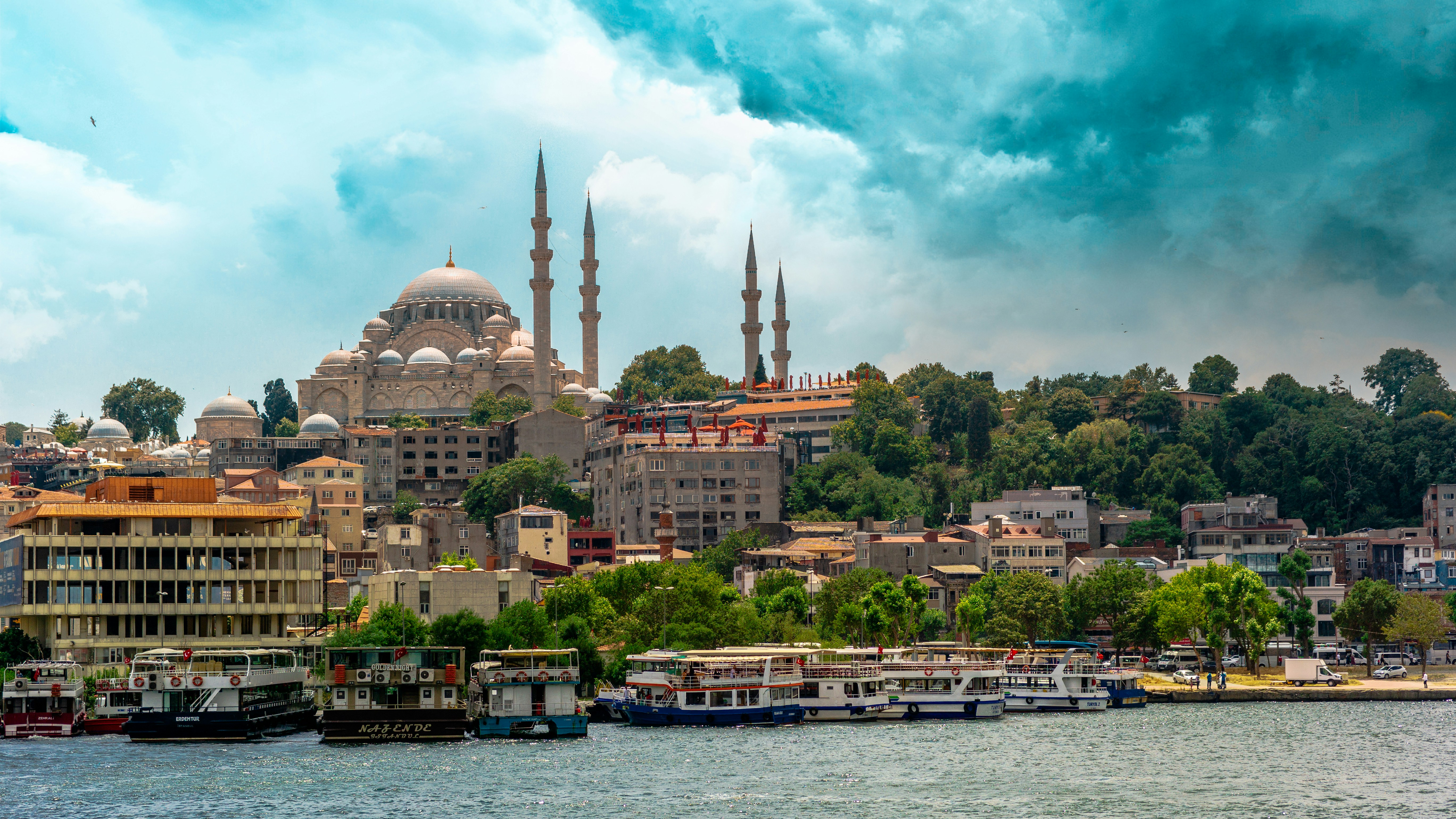
Istanbul rewards travelers who look beyond the postcard. The monuments are magnificent, but the city’s most memorable moments often come from quieter, more considered experiences: art on the waterfront, centuries-old ritual, and some of the most inventive cooking in the region. Here are six ways to spend a refined visit in 2026.
The thread that ties these experiences together is the Bosphorus. The strait runs about 30 kilometers through the city, linking the Black Sea to the Sea of Marmara and forming one of the boundaries between Europe and Asia. Ferries cross it all day, and along its shores stand Ottoman palaces such as Dolmabahçe and Beylerbeyi, together with some 620 waterfront mansions known as yalı. Keep the water in view and each of the stops below begins to feel like a chapter of the same story.
Istanbul Modern, Karaköy
Istanbul’s museum of modern and contemporary Turkish art reopened in May 2023 in a five-story, 10,500 square meter building by Renzo Piano on the Bosphorus shore, which the architect described as a flying vessel right on the water. It is open daily except Monday, with late opening on Fridays, so check current hours before you go.
Galataport and The Peninsula Istanbul
Galataport turned about 1.2 kilometers of Bosphorus shoreline into a car-free waterfront of galleries, shops and restaurants. The Peninsula Istanbul occupies the 1936 Karaköy Passenger Terminal building within it, making the area a natural base for an unhurried day by the water.
The scale of the project is considerable: a development of about 400,000 square meters on the European shore, built on former port warehouses between 2016 and 2022, with around 250 shops and restaurants and a cruise terminal whose customs and immigration halls sit underground. A new public square gathers older landmarks, including the Nusretiye Mosque, the Tophane Pavilion, the Kılıç Ali Paşa Mosque and the Tophane Fountain, so a stroll here moves easily between centuries.
SALT Galata
Housed in the former Imperial Ottoman Bank headquarters, designed by Alexandre Vallauri in 1892, SALT Galata is a free cultural center with exhibitions, a research library and the permanent Ottoman Bank Museum collection. Check its program before visiting, as exhibitions change throughout the year.
A Sinan Hammam at Kılıç Ali Paşa
In Tophane, the Kılıç Ali Paşa Hamamı is a working Ottoman bathhouse designed by the architect Mimar Sinan and built in the late sixteenth century. After roughly seven years of restoration it reopened in 2012, and the project later won a Europa Nostra prize. Separate hours apply for women and men, so confirm bookings directly.
The bath dates to 1580 and was commissioned by Admiral Kılıç Ali Paşa as part of a larger complex that also includes a mosque. Its restoration was a painstaking exercise in craft: later layers of cement, plaster and tile were removed to reveal Sinan’s original stonework, and traditional masonry, woodworking and lead roofing were used to bring back its lead-clad domes. Beneath the main dome, a skylight lets in natural light and supports ventilation, and the result is a space that feels at once ancient and freshly cared for.
Michelin-Starred Dining
The Michelin Guide Türkiye 2026 selection recognizes Istanbul’s leading kitchens. Turk Fatih Tutak holds two stars, and Neolokal and the newly starred Araf hold one each. Turk Fatih Tutak and Neolokal also carry a Green Star for sustainability, so a reservation here is as much about place and philosophy as about the plate.
A Michelin star, as the guide describes it, signals high-quality cooking worth a stop, while two stars mark excellent cooking worth a detour, and a Green Star highlights restaurants that lead the way in sustainable gastronomy. For a traveler, those distinctions are useful shorthand, but the real pleasure is simply to sit down to a long meal and let a kitchen tell you something about the city.
A Night at Çırağan Palace
Built between 1863 and 1867 for Sultan Abdulaziz, Çırağan Palace is now a Kempinski hotel on the Bosphorus. Damaged by fire in 1910, it was restored and reopened in 1992. Staying in a former imperial palace is as close as most visitors will come to seeing the city the way its sultans did.
The palace stands on the European shore between Beşiktaş and Ortaköy and was designed by the palace architect Nigoğayos Balyan, with his sons Sarkis and Hagop Balyan overseeing its construction. Its outer walls were once finished in colorful marble, and a marble bridge linked it to Yıldız Palace above. The Ottoman parliament met here in 1909, and a fire in January 1910 left only the outer walls standing, which makes the later restoration all the more remarkable. Watching the evening traffic of ferries and ships pass beneath the windows is a quiet pleasure in itself.
Planning Your Visit
Pair a morning of art in Karaköy with an evening at the hammam or a reservation at one of the city’s starred tables, and leave room for wandering. Opening hours, exhibitions and menus change, so confirm details with each venue before you travel.
Karaköy, Galataport and Tophane sit close together, so the first four stops can be woven into a single unhurried day on foot. Save the palace for a slower evening, and consider a ferry ride on the Bosphorus to see the shoreline as the sultans and their courts once did. With a little restraint and a willingness to linger, Istanbul reveals a gentler, more private side than its famous skyline suggests.
Related reading: The Best Dining Spots in Athens, Greece and The Rise of Considered Travel.