Aveiro sits where the Atlantic slips inland into a shallow lagoon, and the city has built its character around that water. Often called the “Venice of Portugal” for its canals, it rewards visitors who arrive curious and stay unhurried. For travelers shaping an itinerary in central Portugal, an Aveiro travel guide begins with a simple idea: this is a place to be read slowly, one bridge, one decorated façade and one striped beach house at a time.
The city has a long memory of the water. Aveiro appears in a written record as early as 959, and King Manuel I granted its first charter in 1515. A storm in 1575 closed the entrance to the port, and the lagoon suffered for generations afterward, until the canals completed in 1808 helped the town to prosper again. King José I raised Aveiro to the rank of city in 1759. Knowing a little of this history makes the calm of the waterfront all the more affecting.
The Canals and the Moliceiro Boats
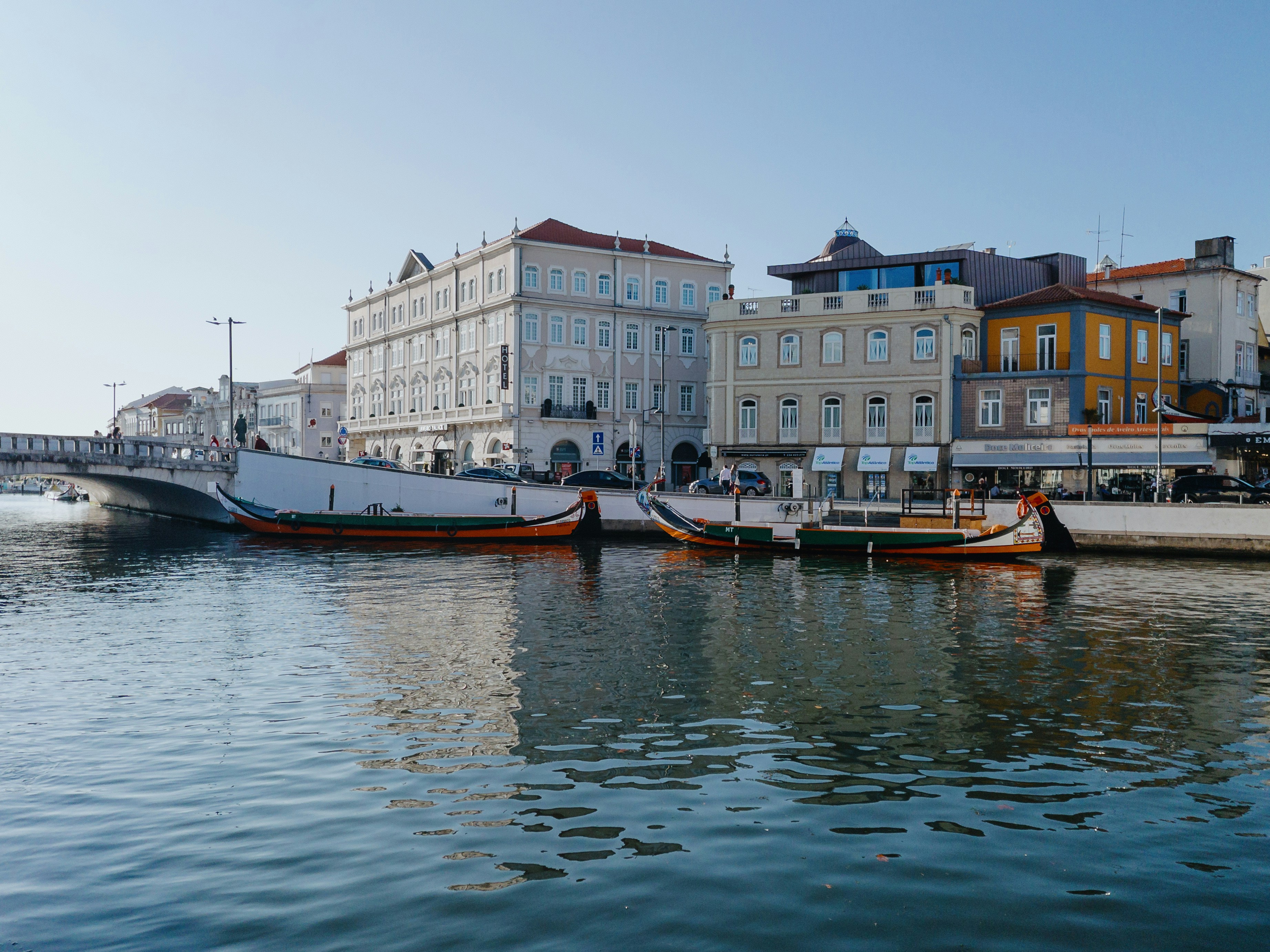
The Canal Central, at the entrance to the city, is a natural first stop. Here you will find some of Aveiro’s most attractive houses and its oldest traditional shops, set along the water in a way that makes even a short walk feel composed. It is the kind of place where an unplanned hour tends to become the highlight of the day.
The moliceiro is the boat most closely associated with the city. These slender craft were once used to harvest seaweed from the lagoon for fertilizer. They were later motorized and today carry mainly visitors, but their painted decoration keeps a good deal of the old spirit: the panels have historically shown local events and political satire, a small gallery of storytelling on the water. A gentle ride is the easiest way to see the city from its own point of view. Choose a calm hour, ask your hotel to confirm departure times, and let the pace set itself.
Salt is another thread in the lagoon’s story. Salt production here dates back to Roman times, and although only a few salt ponds remain, they are a quiet reminder of the working landscape that surrounds the elegant center. The moliceiros are still raced in regattas, which gives the old boats a lively second life.
Art Nouveau in the City Center
Alongside its canals, Art Nouveau architecture is one of Aveiro’s main attractions. The most rewarding way to appreciate it is on foot, with your eyes slightly above street level, where decorative details tend to live. Allow time to wander away from the main waterway into the quieter lanes, stopping where a façade catches the afternoon light. There is no need for a strict route: the pleasure lies in noticing, and the compact center makes noticing easy.
Many of these early twentieth-century buildings are decorated with azulejo tiles, and their construction is often linked to wealthy families who had made their fortunes in Brazil. Aveiro is one of only twenty cities in the Réseau Art Nouveau Network, a recognition of how much of this heritage the city has kept. Ceramics have a far older history in the region, with a tradition reaching back to the late Roman and early medieval periods, which helps explain why tile, porcelain and clay feel so natural here.
Costa Nova and the Table
About 11 kilometers from Aveiro, the coastal village of Costa Nova is known for its colorful striped houses, which line the waterfront like a row of beautifully pressed deckchairs. It is an easy half day: a walk along the shore, a photograph or two, and a long lunch.
The regional table suits the setting. Seafood leads the way, from oysters and codfish to caldeirada, the traditional fish stew, often paired with a glass of Vinho Verde. For something sweet, look for ovos moles and tripa, two of the local confections that Aveiro is known for. A pastry shop near the canals is a pleasant place to end an afternoon.
The ovos moles de Aveiro, delicate egg-based sweets, hold Protected Geographical Indication status, so the name is a promise of origin as well as flavor. Among the other local specialties are trouxas de ovos, another egg sweet, and raivas, a crisp biscuit, all of which make good companions to a small coffee at the end of a walk.
Vista Alegre and Bussaco: Two Quiet Day Trips
Aveiro also makes a graceful base for exploring the wider Centro region. Nearby Vista Alegre is a historic porcelain-making community with its own museum, an introduction to a craft that has long shaped the Portuguese table. Further afield, the protected forest of Bussaco rises on its mountain, with two lakes and a historic palace hotel set among the trees. Together they show a quieter side of Portugal, rooted in craft and landscape rather than crowds.
Planning Your Stay
Two or three nights allows the city, the coast and one day trip to unfold without rushing. Weather near the lagoon can be cooler than elsewhere in Portugal, so a light layer is a sensible companion even in warmer months. Renting a car is worth considering, since city bus frequency is limited and the coast and nearby villages are easiest to reach by road.
Aveiro is also home to a university founded in 1973, which brings a youthful energy to the center, a pleasing contrast with the old canals.
Aveiro is not a destination that shouts. It offers water, light, craft and a good table, and it asks only that you take your time. As always, please confirm opening hours, boat schedules and reservations directly with each venue before you travel.