Near the Spanish border, in the green valley of the Tâmega, the town of Chaves has long been associated with warm mineral waters. Its Roman name, Aquae Flaviae, speaks of springs and of an empire that valued them. For travelers drawn to Portugal’s quieter wellness traditions, Chaves offers heritage, landscape and a pace that invites rest.
A Roman Town Built Around Water
Rome founded Aquae Flaviae, a town that controlled a crossroads on routes toward the mining districts of the north. Archaeologists know that the story of its ancient baths is still being pieced together, and recent excavations have uncovered a baths structure linked to a hot spring. Votive inscriptions dedicated to nymphs, Tutela and Isis suggest that the waters were honored as well as enjoyed.
It is worth imagining how this landscape would have felt to a Roman traveler: a river crossing, a hot spring steaming in cool air, and a town where one could pause after a long journey. That sense of arrival and relief is still easy to imagine today, especially in the soft light of early autumn.
The ancient city sat on a small hill beside the river, between Bracara and Asturica, in a region known for both hot springs and gold mining. Scholarship describes an aqueduct that carried water from a reservoir and dam at Abobeleira, along with a necropolis and sections of defensive wall. In the fourth century Aquae Flaviae became a bishopric, a sign of how important the settlement had grown.
The excavations at Largo do Arrabalde are especially evocative. They revealed the first known thermal remains in Chaves, including large pavement slabs and Roman concrete beside a hot spring, a tangible link between the town’s modern spa identity and its ancient one.
Trajan’s Bridge
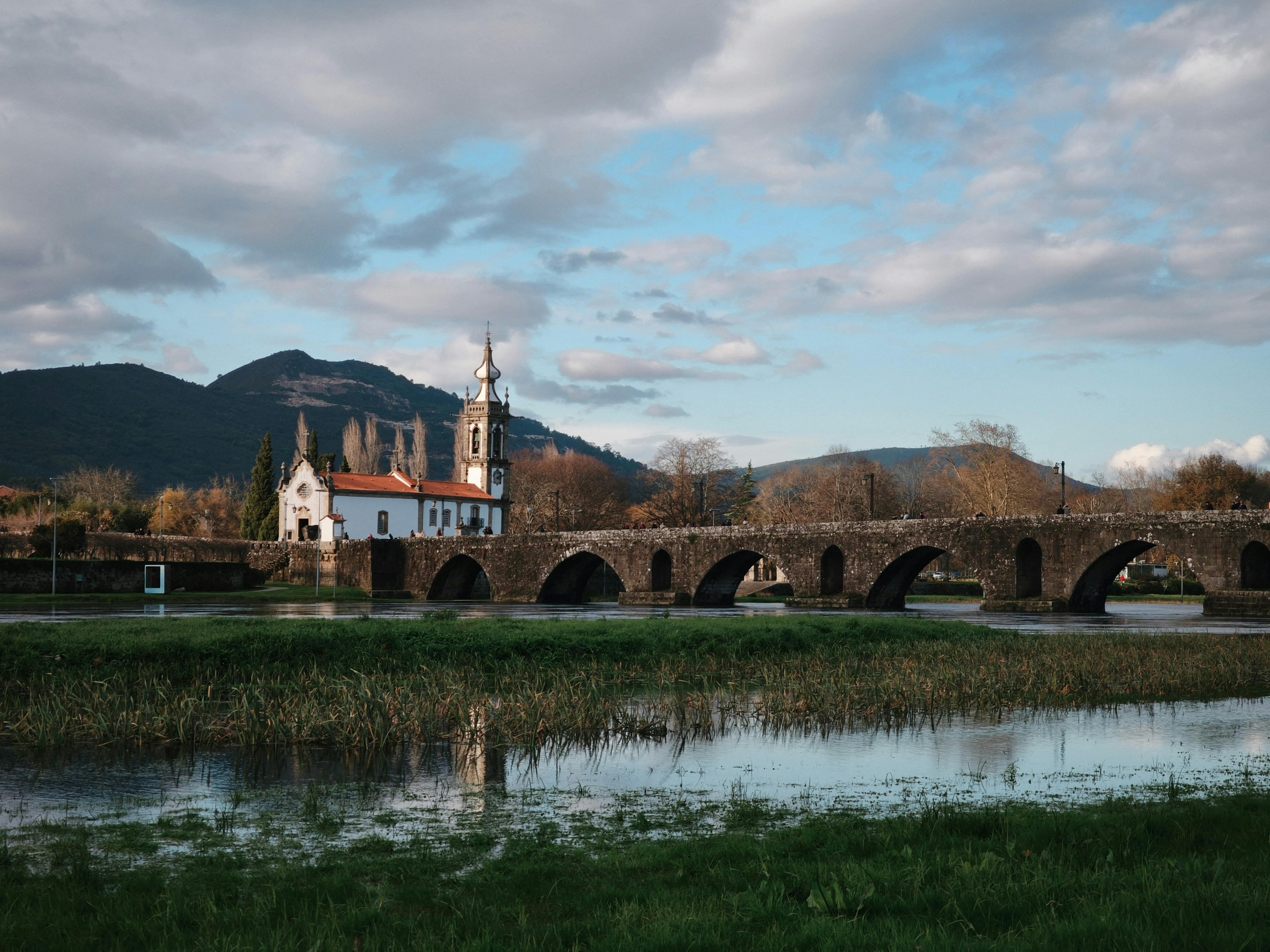
The most striking monument of the old town is the Roman bridge across the Tâmega, which carries inscriptions commemorating construction or remodeling under Emperor Trajan. A walk across it at the end of the afternoon, with the river below and the old quarter behind, is a fine way to feel the continuity between past and present.
One inscription, known as the Padrão dos Povos, lists the communities tied to this corner of the Roman northwest. Beyond the bridge, the old quarter rewards slow wandering: the name Chaves means keys, a nod to the town’s long role as a strategic stronghold, and a medieval castle still watches over the rooftops.
The bridge is also a pleasing place to understand the town as a whole. From the riverbank, the Tâmega slides quietly past, the old quarter rises in layers of stone and tile, and the green hills beyond make clear why this valley has attracted settlers for so many centuries.
Taking the Waters Today
Portugal has a living thermal culture, and Chaves belongs to a wider northern landscape of spa towns that includes nearby Vidago. The pleasure of a thermal visit lies as much in the rhythm as in the treatment: slow mornings, a simple lunch, an unhurried walk. Plan around rest, and let the town set the tempo.
The town’s thermal story continues in contemporary form. Visitors can learn more about the Roman baths at a local museum, and a public fountain, the Buvette, allows curious guests to taste the mineral water, which emerges from the ground hot. It is a small ritual, but one that connects the present directly to the same source the Romans once honored.
Regional cooking is part of the experience, and the area is known for its smoked meats and hearty northern table. Pair a thermal day with a leisurely meal and an early evening, and the visit becomes a small retreat rather than an itinerary.
Among the town’s best-loved specialties is the pastel de Chaves, a puff pastry filled with minced veal, which carries Protected Geographical Indication status. Enjoyed warm from a local bakery with a coffee on a cool morning, it is a modest and delicious way to begin a day of rest.
A thoughtful visit might unfold across two days. Begin with the Roman bridge and the museum in the morning, take the waters or a treatment in the afternoon, and keep the evening for a long northern dinner. Leaving space between each part allows the restorative character of the town to do its quiet work.
Planning Your Visit
Treatments, opening periods and facilities vary by season, so please confirm details with each venue before you travel. This article is for inspiration only and is not medical advice; if you have a health condition or are unsure whether thermal treatments suit you, please consult a qualified professional before booking.