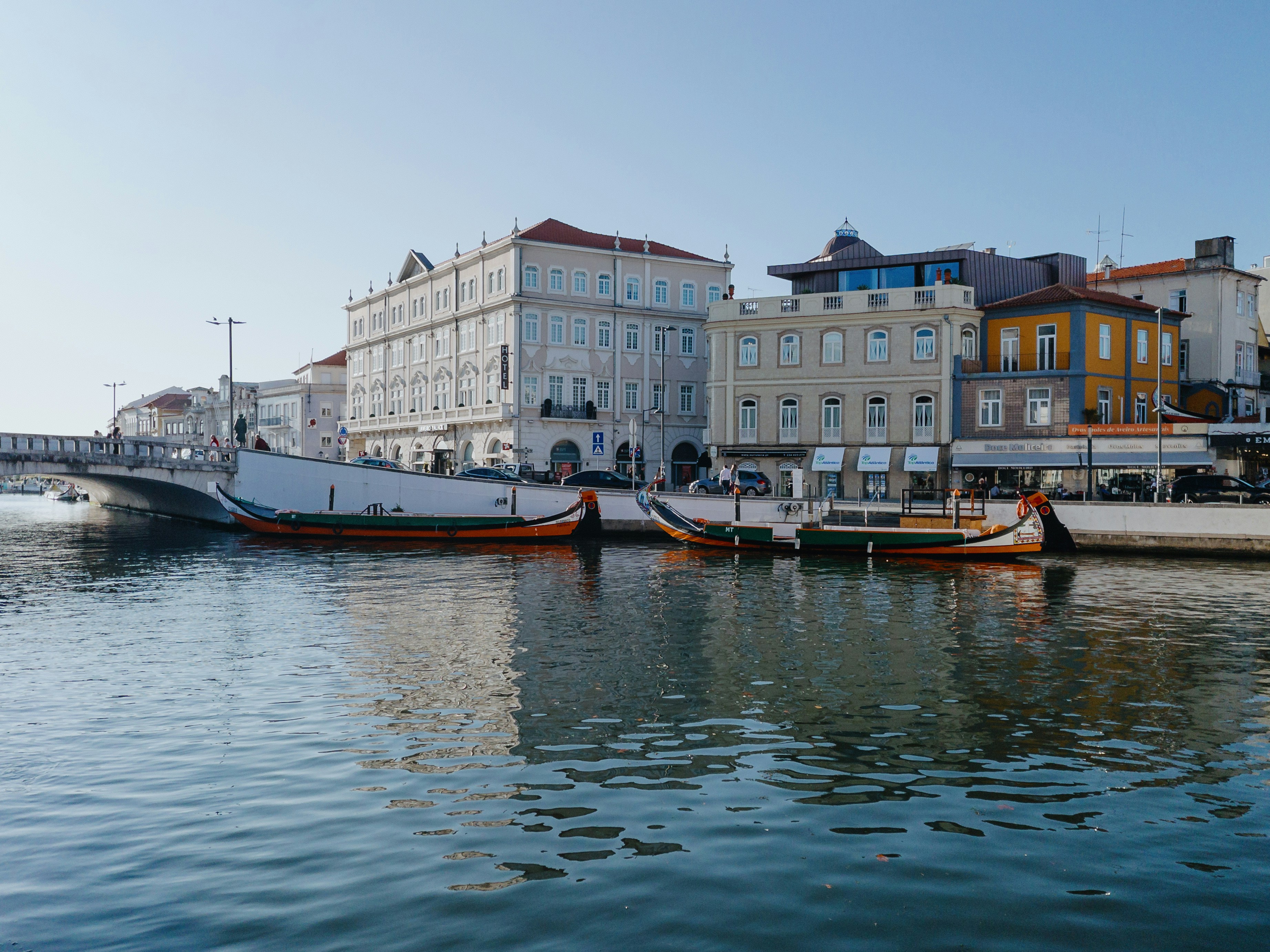
Cross the lower deck of the Dom Luís I Bridge from Ribeira and the pace of Porto softens. On the opposite bank, terracotta roofs step down toward the Douro, and the great names of port wine are painted in white across old warehouse walls. This is Vila Nova de Gaia, where the wine of the upper Douro comes to rest, and where a visit rewards those who arrive with curiosity rather than a checklist.
Why the wine rests in Gaia
Port begins in the Douro Valley, roughly 100 kilometers east of Porto, where vines climb steep schist terraces and the wine is fortified with grape spirit. Harvest and fermentation happen upriver. Historically, the casks traveled downstream on traditional rabelo boats to Gaia, whose cooler, more humid air suited long maturation and blending. The lodges, known locally as caves, still handle that quiet work of ageing, blending and bottling.
The fortification is the heart of the style. Grape spirit is added while the wine is still fermenting, which halts the process early and leaves natural sweetness behind, and it raises the strength to roughly 19 to 22 percent alcohol by volume. Wine from the Douro has been made for about two thousand years, and the vineyards of the Alto Douro, some 24,600 hectares of steeply terraced slopes, are recognized by UNESCO as a cultural landscape of outstanding beauty.
The region itself has a long story. In 1756, the Companhia Geral da Agricultura das Vinhas do Alto Douro regulated and demarcated the area where port could legitimately be produced. That sense of place and order still shapes how the wine is presented today.
The earliest terraces were narrow and irregular, held up by walls of schist and planted with only one or two rows of vines. After the phylloxera blight of the 1860s, wider and more regular terraces were built when the vineyards were replanted. Until 1986, port could be exported only from Vila Nova de Gaia, which explains why the great houses gathered on this bank of the river.
Choosing a lodge with care
Dozens of houses line the riverfront and the slopes above it, and the names tell the story of a long Anglo-Portuguese partnership: Cockburn, Croft, Graham’s and Taylor’s alongside Cálem, Ferreira, Kopke and Ramos Pinto. Each has its own character. Some offer museum-style visits, some a historic library, and several pair the cellar tour with a terrace tasting and views back toward Porto. Sandeman occupies a handsome riverfront building, while Taylor’s and Croft are known for terrace tastings.
Our advice is to choose one or two rather than many. A single unhurried visit, with time to linger over the last glass, tells you more than a procession of quick stops. Tours are offered in English, and most lodges welcome visitors to purchase bottles to carry home.
Tasting with intention
Port is not one wine but a family, and a good tasting is a chance to meet several members of it.
White port is light and fresh, often served chilled and sometimes lengthened with tonic: a gentle opening for the palate. Ruby is young, deep red and fruit-driven, with Reserve and Late Bottled Vintage styles stepping up in refinement. Tawny is aged in small casks, which gives amber color and notes of nuts, dried fruit and caramel; labels of 10, 20, 30 or 40 years signal the age. Vintage port comes from a single declared year and matures in bottle, made only in exceptional years, so it is a rare treat. A colheita is a single-harvest tawny aged at least seven years in cask, often a highlight of a more extensive tasting.
Rarity is the right word for vintage port. Each shipper decides whether to declare a vintage, usually early in the second year after the harvest, and the wines make up only about two percent of production. A younger arrival is rosé port, introduced in 2008, which is made as a ruby with limited skin contact.
If you wish to taste only one style, a 20-year tawny is a graceful choice. Hold the glass to the light, note the color, then breathe in before you sip. Ask your guide what the house is proudest of; the answer is usually the best part of the visit.
Arriving the unhurried way
The walk across the bridge from Ribeira takes about ten to fifteen minutes and is part of the pleasure. You can also take Metro Line D to Jardim do Morro, or ride the Teleférico de Gaia for an aerial view of the lodges and the river. Many lodges use timed tickets, and from spring through autumn, particularly at weekends, it is wise to reserve ahead, with English-language tours often filling first.
The bridge itself deserves a glance. It opened in 1886 and was designed by Théophile Seyrig, a former partner of Gustave Eiffel. Its double-deck metal arch spans 172 meters, and at the time it was the longest of its type in the world. The cable car links the riverbank with the upper deck, close to the Serra do Pilar monastery, which played a defensive role in the Siege of Porto of 1832.
Closing the afternoon
Leave room at the end of the day for stillness. Take a table by the water, watch the light settle on the Ribeira façades across the river, and let one last pour of tawny linger. A visit to Gaia is, at its best, an education in patience: wine that has waited years in the dark, offered to you in a single unhurried hour.
Hours, tour formats and availability change, so please confirm details directly with each venue before you visit.