Some journeys are best taken at the pace of the landscape. The Douro Valley by train is one of them: a long, unhurried ride along a river that has shaped Portuguese wine for centuries, with terraced hillsides unfolding on both banks. For travelers who prefer to arrive slowly, the Linha do Douro offers a graceful way into northern Portugal’s most celebrated wine country.
A railway built for the river
The Douro Line was built between 1875 and 1887 and runs more than 170 kilometers beside the Douro River, from Porto to Pocinho. It crosses the Douro Wine Region, widely described as the world’s oldest demarcated wine region, whose cultural landscape was inscribed by UNESCO as a World Heritage Site in 2001. Trains are operated by CP, Portugal’s national railway, and services from Porto depart from São Bento or Campanhã stations.
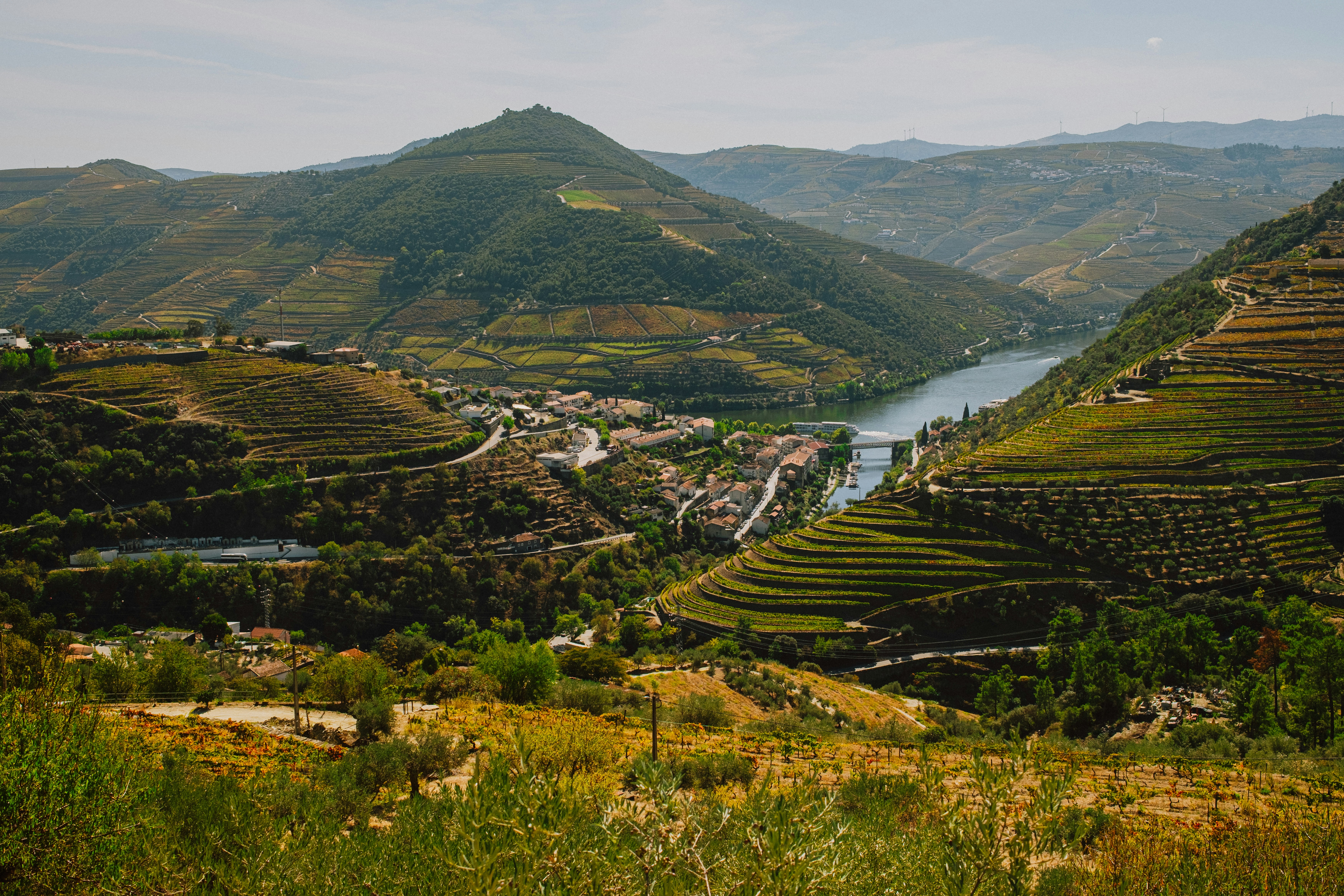
The scenery builds gradually. Once the train leaves the Porto area and follows the river inland, the valley narrows, the hills steepen and the vineyards begin, climbing in careful terraces toward the sky. Along the way the line passes over iron bridges and through tunnels cut into the rock, so the view keeps changing from one window to the next.
What the window frames
The landscape you watch from the carriage is the result of a very long collaboration between people and slope. UNESCO notes that wine has been made in the Alto Douro for roughly two thousand years, and that the inscribed property covers about 24,600 hectares of steeply sloping, terraced vineyards. The Marão and Montemuro mountain ranges shelter the valley from Atlantic winds.
Look closely and the terraces tell their own story. The earliest ones, built before 1860, were narrow and irregular walls of schist stone, with room for only one or two rows of vines. After the phylloxera outbreak, the vineyards were replanted in the late nineteenth and early twentieth centuries on longer, wider and more regular terraces, tilted slightly to give the vines more sun. Between the vines you may glimpse orange groves, patches of scrub and the white walls of quintas, chapels and small villages, all part of the same cultural landscape.
Port wine and a regulated past
The river also carries a commercial history. According to UNESCO, the quality of Port wine has been defined and regulated since 1756, and the historic boundaries of the demarcated region still largely correspond to the area known today. That continuity gives the valley a quiet sense of identity: the names on station signs and vineyard gates are the same names that have been associated with the region for generations.
For a gentle companion to the ride, bring a notebook and keep your camera close, because the view changes with every bend in the river. Even a short section of the line, taken without hurry, rewards the traveler who is willing to look out of the window rather than at the clock.
Pinhão and its tiled station
For many visitors, Pinhão is the natural place to step off. This small riverside town sits in the heart of the wine country, and its railway station is a destination in its own right. The section of the line to Pinhão entered service in 1880, and in 1937 the station was decorated with 24 azulejo panels, made up of more than 3,000 tiles. Designed and painted by João Marques Oliveira and Lourenço Rodrigues Limas, based on photographs by Casa Alvão, and produced by the Aleluia factory in Aveiro, the panels depict the landscapes and traditions of the Douro: the grape harvest, the treading of grapes, and wine traveling downriver by rabelo boat to Vila Nova de Gaia.
It is one of the most photographed railway stations in Portugal, and it makes a fitting introduction to the valley before you continue to a nearby quinta, a river walk or a long lunch.
The Historic Douro Train
In summer, CP runs the Historic Douro Train from Régua. It is made up of five wooden carriages from the early twentieth century, pulled by a diesel locomotive in its original colors. The fare includes traditional entertainment on board and a complimentary glass of Port wine, and the route stops at Pinhão and Tua. It is a charming option for travelers who enjoy the romance of a heritage journey, though the service is seasonal, so it is worth checking the current timetable before you plan around it.
Planning a slow Douro journey
A few considerations make the trip more rewarding. Choose a window seat on the river side where possible, allow time to stop rather than rushing to the end of the line, and pair the rail journey with a night in the valley so the evening light can do its work on the hillsides. Tua is another worthwhile stop for exploring the landscape and sampling local products, and the Douro’s harvest season in early autumn brings its own particular energy to the vineyards.
Because timetables, ticket types and seasonal services change, please confirm current details with CP and with each venue before you travel.