Some islands ask to be conquered. Porto Santo asks only to be enjoyed slowly. Lying northeast of Madeira, this small Atlantic island is about 11 kilometers long and 6 kilometers wide, a scale that makes the whole place feel like a single unhurried afternoon. Its calling card is a long golden beach, but the island rewards visitors who look beyond the sand: basalt columns, old windmills, sunset viewpoints and a museum linked to one of the great names in the history of exploration. This guide gathers the essentials for planning a calm, well-paced visit to Porto Santo, the golden gem of the Madeira archipelago.
Getting to Porto Santo from Madeira
There are two graceful ways to arrive. Porto Santo Airport receives daily flights from Madeira Airport, a hop of roughly 15 minutes, and it also has domestic connections to Lisbon and Porto. The alternative is the sea route: the crossing from Madeira takes about two and a half hours, and for travelers who enjoy the sense of leaving one place and arriving in another, the ferry has an old-fashioned charm that a short flight cannot match. Whichever you choose, it is wise to confirm current schedules with the operator before you travel, since timetables vary by season.
The Nine-Kilometer Beach
The island’s defining feature is a white-gold beach of about nine kilometers on the southwest coast, set along a gentle coastal plain. It is the kind of shoreline where the pleasures are simple and unrushed: long walks at the water’s edge, a morning swim, an afternoon with a book beneath the sky. For more active days, the shoreline also suits windsurfing, kayaking and snorkeling. Many visitors choose to stay close to the sand, with a hotel beside the beach so that the sea becomes part of the daily rhythm, a short walk from breakfast to the shoreline and back again at sunset.
Vila Baleira and Casa Colombo
The island’s main town, Vila Baleira, is the natural base for exploring the cultural side of Porto Santo. Here you will find Casa Colombo, the Porto Santo Museum, said to have been the home of Christopher Columbus and his wife, Filipa Moniz Perestrelo, daughter of Bartolomeu Perestrelo, the island’s first governor. The couple are recorded as having lived on the island for a time, and the museum introduces the story of Porto Santo itself, from its early settlement to the island life of today. It is a modest, thoughtful stop, best enjoyed without hurry, and it gives the beach days a welcome sense of history and place.
Hills, Windmills and Viewpoints
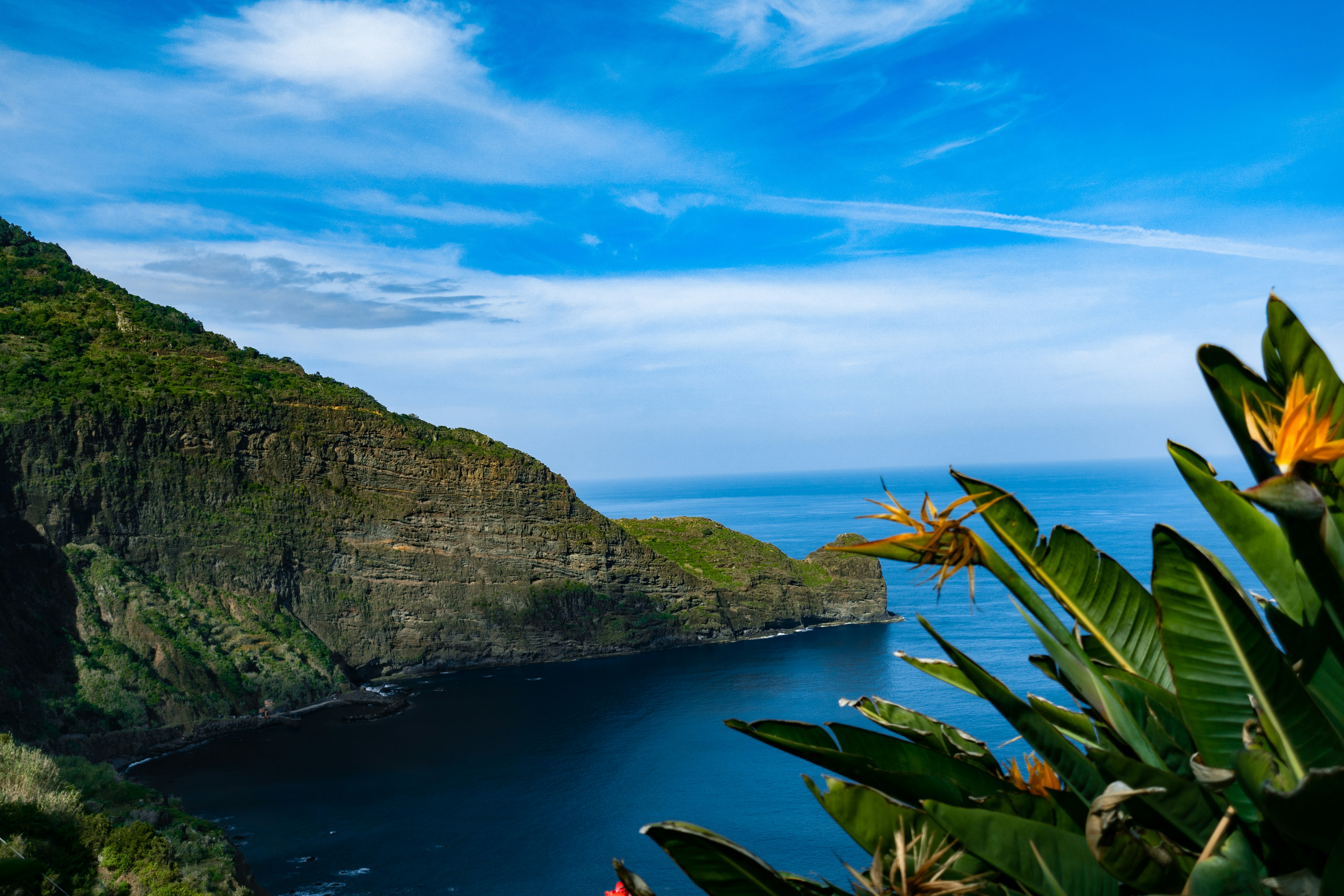
Beyond the sand, Porto Santo reveals a dramatic volcanic character. Pico de Ana Ferreira rises to 283 meters on the western side of the island, and the walk to its summit is rewarded with wide views over the coastline. The island’s highest point is Pico do Facho, at 517 meters. Nearby, the Organ Pipes are basalt columns shaped over millions of years of erosion, and they can be admired without the climb to the summit. Elsewhere, the old windmills that once ground local grain now stand as gentle landmarks across the landscape.
Walkers may enjoy the PR1 Vereda do Pico Branco and Terra Chã, a 5-kilometer out-and-back route in the greener northeast of the island, with a climb of about 300 meters and coastal views along the way. For the evening hour, two viewpoints are especially admired: Miradouro das Flores, where golden cliffs glow at sunset, and Furado Norte, which looks toward the lighthouse on the Ilhéu de Ferro, just off the west coast. Sea kayaking tours also explore the rock formations and natural caves along the coast, including a beach that is usually difficult to reach by land.
When to Visit and How to Pace It
Porto Santo has a mild, sunny character. Its climate is described as semi-arid, with mild to warm winters and warm to hot summers, and the airport records about 2,400 hours of sunshine in a typical year. August and September are the sunniest months, July and August the driest, and November and December the wettest. That makes the island a thoughtful choice for slow travel across much of the year, whether you are seeking a beach week or a quiet shoulder-season escape.
Two days is enough to taste the island: one for the beach and the town, one for the hills and viewpoints. A longer stay allows you to add kayaking, a longer walk and more unhurried evenings. As with any island itinerary, please confirm opening hours, ferry times and activity bookings with each venue or operator before you go, as details can change.
Porto Santo is a reminder that some of Portugal’s most memorable places are also its quietest. A long beach, a few good viewpoints and a sense of history are all it takes.