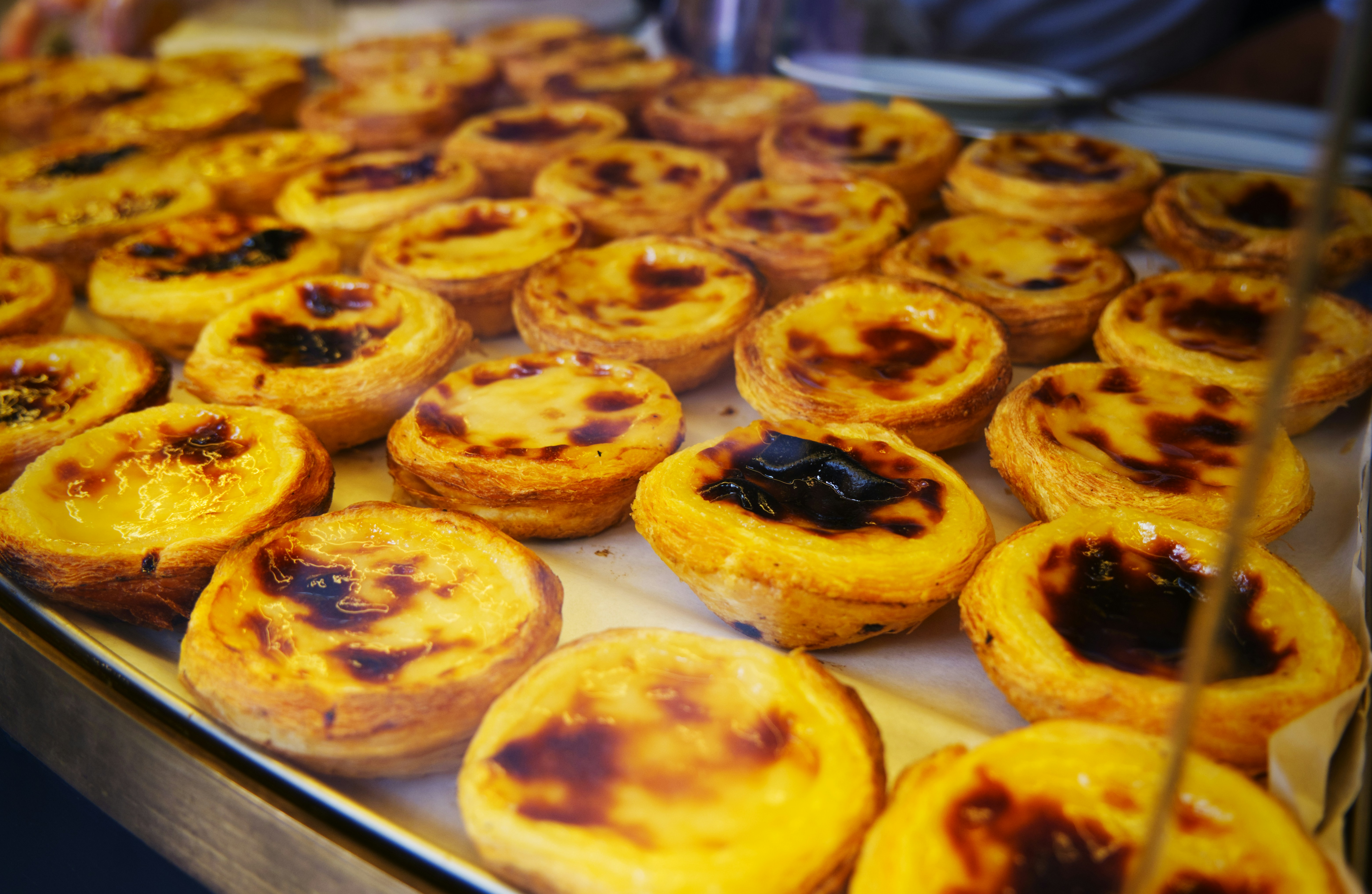
Few pastries in the world are as instantly recognizable as the pastel de nata: a small tart with a crisp, flaky shell, a silky egg custard and a dark, caramelized blister across the top. In Portugal it is more than a treat. It is part of the daily ritual of the café, the morning coffee, the afternoon pause. For travelers, tasting a pastel de nata in Lisbon is one of the simplest and most rewarding ways to understand the country’s love of eggs, sugar and craft. This guide explains where the pastry came from, what makes it distinctive and how to enjoy it properly.
What Is a Pastel de Nata?
The name translates roughly as cream pastry, and the plural is pastéis de nata. At its heart it is an egg custard tart, made with egg yolks in a laminated pastry shell, and it is typically served fresh from the oven. Many people dust it with cinnamon and powdered sugar at the table, a small ritual in itself. You may also see it called a Portuguese egg tart or custard tart abroad, and in Belém it is traditionally known as a pastel de Belém. The pleasure lies in the contrast: a shell that shatters gently, a custard that is warm and soft, and a hint of spice on the surface.
A Story That Begins in a Monastery
The origins of the pastry lead to the Jerónimos Monastery in Belém, Lisbon. According to the commonly told history, monasteries used large quantities of egg whites to starch clothing, which left an abundance of yolks, and Portuguese convents became known for sweets that put those yolks to good use. The monks of Jerónimos are credited with creating the original pastries.
After the Liberal Revolution of 1820, religious orders were dissolved, and the monastery closed in 1834. Monastery workers began to sell the pastries at a general store beside a nearby sugar cane refinery, a way to earn a living in uncertain times. In 1837 baking began in buildings attached to that refinery, and the Fábrica de Pastéis de Belém was born. The shop is still owned by descendants of the refinery’s owners, and the recipe is described as a closely kept secret, shared only with master confectioners who work in a dedicated room.
Tasting at Pastéis de Belém
The historic shop sits on Rua de Belém, at numbers 84 to 92, a short walk from the monastery. It is widely reported to sell more than 20,000 pastries a day, so it is often busy, and it helps to arrive with a little patience. Many visitors sit down with a pastry and a coffee, which turns a quick stop into a small ceremony. The shop is the only place that makes the original Belém recipe, which makes it a natural starting point for anyone who wants to taste the pastry at its source.
Pair the visit with a walk to the Jerónimos Monastery and the Tower of Belém, both of which are close by. A pastry after a morning among the cloisters is a very Lisbon way to spend the day.
Tasting Elsewhere in Lisbon and Beyond
Belém is not the only place to taste a good pastel de nata. Bakeries and cafés across Lisbon, Porto and the rest of Portugal bake their own versions, each with a slightly different shell, a slightly different balance of custard and caramelization. Tasting several is part of the fun. Pay attention to the shell, which should be crisp and layered; to the custard, which should be smooth rather than stiff; and to the top, where a dark, gently scorched surface is considered a mark of a well-baked tart.
The pastry has also traveled far beyond Portugal. It is loved in former Portuguese territories such as Brazil, Mozambique, Macau, Goa and Timor-Leste, as well as in parts of Western Europe and Asia. In 2009 The Guardian listed it among the 50 best things to eat in the world, and in 2011, following a public vote, it was named one of the Seven Wonders of Gastronomy of Portugal.
How to Enjoy It Properly
A pastel de nata is best eaten warm, soon after it leaves the oven. Sprinkle a little cinnamon, and a touch of powdered sugar if you like, and take it with a bica, the Lisbon name for a short, strong espresso. The bitterness of the coffee is a natural partner for the sweetness of the custard. Many Portuguese eat the pastry standing at the counter, which is both an authentic experience and a quick one, though a table is lovely if you wish to linger.
For travelers, a small practical note: opening hours, queues and prices vary, so please confirm details with each venue before you visit. Even so, a single warm tart on a quiet morning in Lisbon is hard to forget, and it remains one of the most approachable introductions to Portuguese culture.