
In the green north of Portugal, where the Vizela River bends past old trees and quiet paths, there is a thermal town that has welcomed bathers for a very long time. Caldas de Vizela, the spa district of the town of Vizela, has been associated with its mineral waters since Roman times, and it was once nicknamed the Queen of Portugal’s Spas. Today it offers a gentle, unhurried kind of wellness: a historic bathhouse, a leafy park, riverside cafés and the soft, mineral warmth of its springs. This guide looks at the heritage of Termas de Vizela and how to enjoy a calm visit.
A Spa Town With Roman Roots
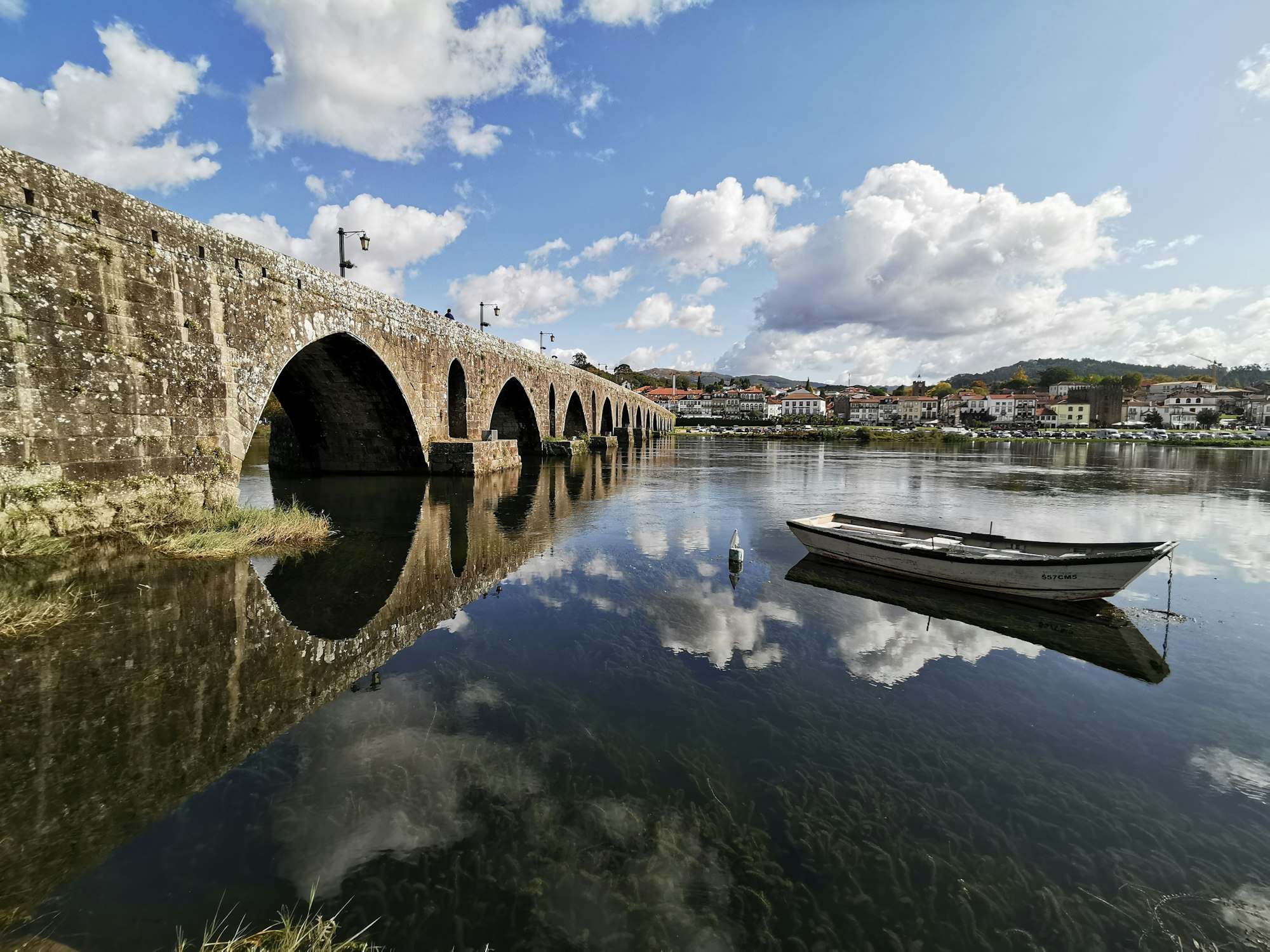
The Romans were the first to use the hot springs of Vizela, and the area still carries traces of that early history. The Ponte Velha de Vizela is a Roman bridge on the road between Braga and Amarante, about 2,000 years old and listed as a national monument. In the Jardim Público Manuel Faria, a statue titled Vizela Romana recalls the town’s ancient origins. Nearby, the archaeological site of Citânia de Sanfins preserves remains reaching back to the fifth century BC. For travelers who enjoy wellness with a sense of history, the town offers a quiet lesson in how long people have gathered around warm water, and a reminder that the pleasure of a thermal town has always been as much about atmosphere as about the springs themselves.
The Golden Age of the Baths
The thermal complex was refined in the 1870s and drew affluent Portuguese visitors as well as British nobility, and the town earned its nickname during this period. As the twentieth century progressed, the complex declined, and it was restored in 1982. The springs themselves are described as sulphurous and rich in sodium, with temperatures that range from about 15 to 65 degrees Celsius and a combined flow of more than a million liters a day. That abundance is part of the reason Vizela became such a well-known destination for taking the waters.
Parque das Termas: A Garden Built for Rest
One of the most appealing parts of the town is the Parque das Termas. In the 1880s the horticulturalist José Marques Loureiro planted hundreds of native and exotic trees around the springs, creating a landscape meant to soothe those who came to the baths. Those trees have grown very large, and the park is especially pretty when it blooms in April and May. Today the park has riverside cafés, a children’s playground and a minigolf course, and at a bend in the river there is a bar and an outdoor bathing area. It is an ideal setting for a slow morning walk before or after a spa visit, and a pleasant place to pause with a coffee beneath the mature trees.
Visiting Termas de Vizela
The Balneário de Vizela, on Rua das Termas in Caldas de Vizela, is the town’s main thermal attraction. Its current building is set within gardens that are designed to promote relaxation, and the offering includes spa services, a Scottish bath and hydromassage. Opening hours have been listed as weekdays from 9:00 to 13:00 and 15:00 to 18:00, with slightly different hours on Saturday and a shorter morning on Sunday. Because hours and services change, it is wise to check directly with the venue before planning your day, and to book any treatments in advance.
There is also a luxury spa hotel in town that serves the hot springs, which suits travelers who prefer to make a longer retreat of the visit.
Pairing Vizela With the Rest of the Minho
Vizela sits conveniently close to some of northern Portugal’s most admired destinations. Guimarães, a UNESCO World Heritage city, is about 10 kilometers away and is linked to the story of Afonso Henriques and the Palace of the Dukes of Braganza. The Mosteiro de Santa Maria de Pombeiro, a national monument with roots in the ninth century, has a Baroque choir and altar. For something sweet, the town is known for bolinhol, a sponge cake that Casa de Pão de Ló Delícia has baked since 1880. And for wine lovers, Caves do Casalinho is a winery founded in 1944 with 30 hectares of vineyards.
Together, these places make Vizela an easy base for a restorative weekend: a morning at the baths, an afternoon in a park, an evening in a historic city. It is a quiet and elegant way to experience the wellness heritage of northern Portugal.
A note on wellbeing: this article is for general interest and inspiration only. It is not medical advice, and anyone with a health concern or condition should speak with a qualified professional before using thermal waters or spa treatments. Please also confirm details with each venue before you visit.