
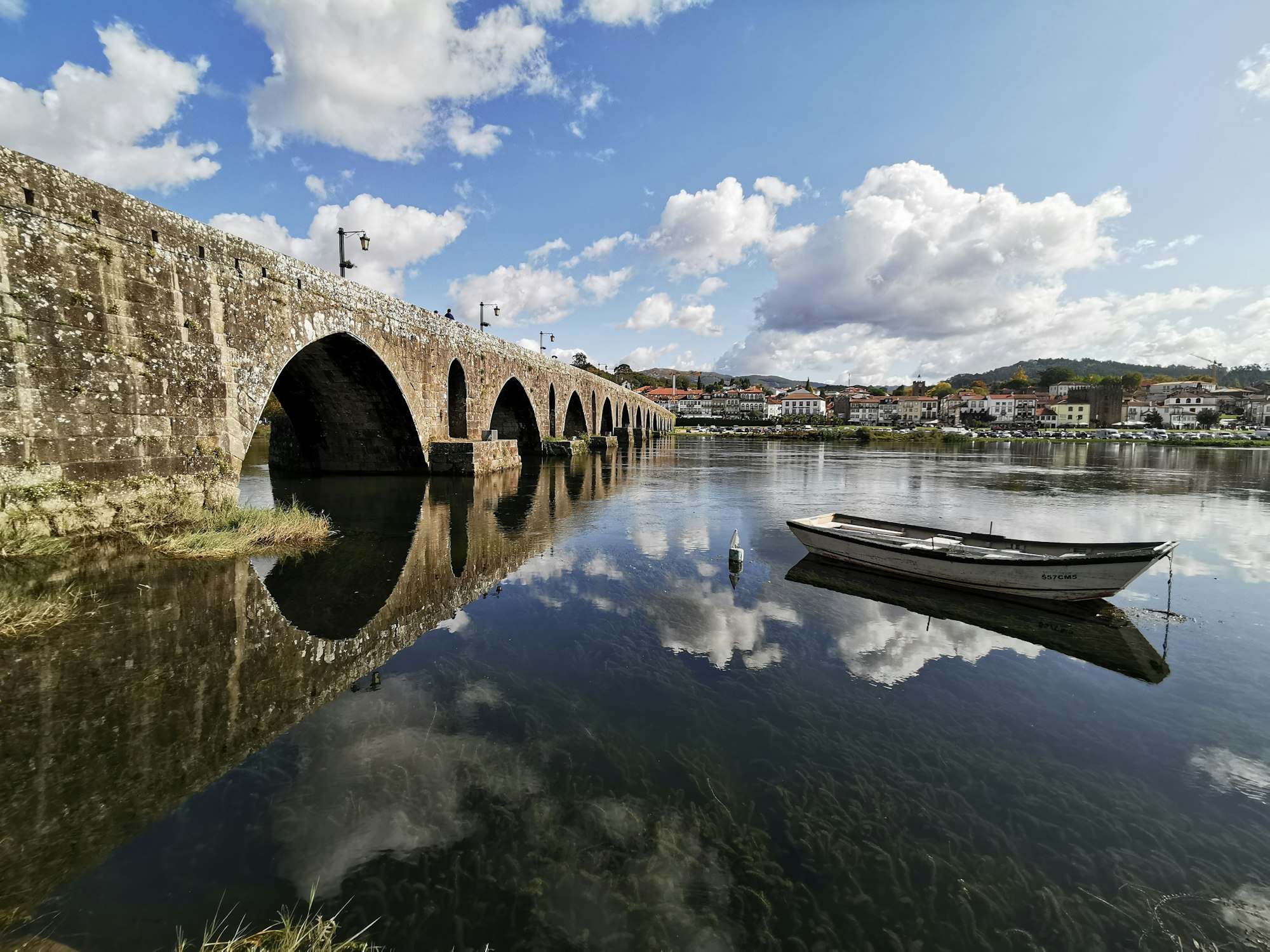
Northern Portugal is often introduced through Porto and the Douro, yet the green country above them has a gentler rhythm. In the Minho, the Lima River winds toward the Atlantic past stone bridges, walled vineyards and market squares, and two towns anchor the journey: Ponte de Lima, upriver, and Viana do Castelo, where the river meets the sea. Together they make a calm, rewarding Minho travel itinerary for readers who prefer atmosphere to ticking off sights.
Ponte de Lima: A Town Built Around Its Bridge
Ponte de Lima takes its name from the bridge that spans the Lima River, a crossing that blends medieval arches with older, Roman-era foundations and has become the symbol of the town. It is also described as the oldest chartered town in Portugal, with a first charter dating to March 4, 1125, a detail that gives its quiet streets a pleasing sense of depth.
That first charter was granted by Theresa, Countess of Portugal, and her son Afonso Henriques, and it was later confirmed by King Afonso II in 1217. Fortifications followed under King Pedro I: an inscription on the Torre de Santo António is dated 1359, and the town walls were completed by 1370. In the sixteenth century, King Manuel I ordered the bridge paved and crowned with merlons, so the crossing you walk today carries the imprint of several reigns.
The best way to begin is on foot. Cross the bridge slowly, then return along the riverside gardens, where plane trees and benches invite a long pause. The town also sits on the Central Portuguese branch of the Camino de Santiago, so you will often share the lanes with walkers whose pace sets the tone for the whole place.
The Market, the Festival and the Table
Every second Monday, the riverbank fills with one of the largest country markets in Portugal, a tradition that stretches back to medieval times. Come early for the produce, textiles and regional bread, and leave time for a table afterward. The area is known for its red vinho verde, a distinctive and often surprising wine, and for sarrabulho rice, a rich regional dish best enjoyed unhurried.
If your plans are flexible, consider the second weekend of September, when the Feiras Novas fill the town with processions, music and fireworks. The festivities were established in 1826 by King Peter IV and honor Nossa Senhora das Dores, and they remain a vivid window into local life.
The festival is important enough to the town that the municipal holiday falls on the Tuesday that follows, a small detail that says a great deal about how local life is organized around its traditions.
Viana do Castelo: Where the River Meets the Atlantic
From Ponte de Lima, Viana do Castelo is a short journey toward the coast. At the mouth of the Lima, the city feels brighter and more open, shaped by sea light and a long relationship with the water. The Praça da República, lined with arcades and fountains, is the natural place to start, ideal for a coffee and a slow look at the surrounding façades.
Look closely and the square tells its history in stone. A Renaissance fountain dated 1535 stands in the town’s main square, and the Flemish-style Church of Mercy, dating to 1589, belongs to the same architectural conversation. Together they suggest a port town that prospered in the age of ocean voyages and built accordingly.
Above the city, the hilltop basilica of Santa Luzia is reached by funicular. The reward is a wide view where river and Atlantic meet, and it is especially lovely in the soft light of late afternoon. Take the ride up, linger at the top, and walk back down toward the water as the day cools.
The sanctuary was designed by the architect Miguel Ventura Terra. Construction began in 1904, the exterior was completed in 1943, and work on the interior continued until 1959, so the building belongs to the unhurried tradition of great hilltop churches that take generations to finish.
Festivals and Iron Bridges
If your dates allow, aim for the Festa de Nossa Senhora d’Agonia, a multi-day celebration regarded as one of the largest and oldest religious festivals in Portugal. The municipal holiday is observed on August 20, and the town spends the days around it in procession, color and music.
Engineering enthusiasts will also enjoy the Ponte Eiffel, the railway bridge over the Lima designed by Gustave Eiffel. It was built for the Minho Line, which reached Viana in 1878, and it is a reminder that this quiet corner of the north was once connected to Europe’s great age of iron and steam.
Planning Your Minho Days
Two or three nights allow the region to unfold without haste. A sensible shape is a night or two in or near Ponte de Lima, with a market morning if the calendar allows, followed by a night in Viana do Castelo for the coastal evening. A car makes the countryside easier to explore, particularly if you wish to visit small vinho verde producers, many of whom welcome visitors by appointment.
Spring and early autumn tend to feel especially pleasant, when the valley is green and the days are mild. As always, confirm opening times, market dates and festival programs with each venue or the local tourism office before you travel, as details can change from season to season.
The Minho does not announce itself loudly. It rewards the traveler who arrives with time, a good appetite and a willingness to follow the river. For a considered Portugal itinerary beyond the usual circuit, it is a graceful place to begin.


