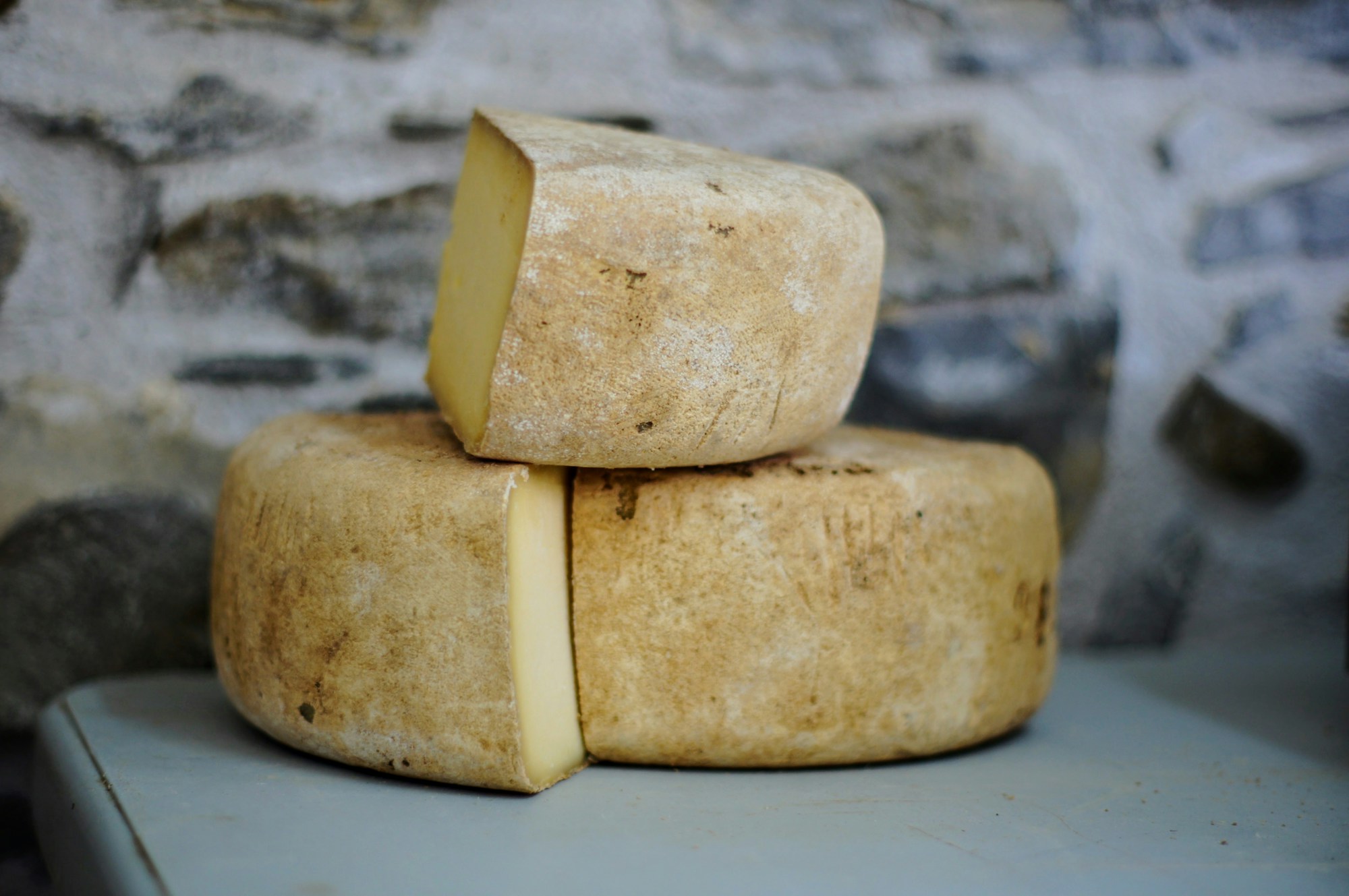
In the granite country around Portugal’s highest mainland mountains, winter brings one of the country’s most celebrated foods to the table. Queijo Serra da Estrela is a soft, rich ewe’s milk cheese with a texture so yielding that it is often eaten with a spoon. It is rustic in origin and refined in flavour, and for many Portuguese it is the taste of the cold months.
A Cheese With Protected Origins
Serra da Estrela cheese holds Protected Designation of Origin status, which ties it to a defined area of the Beira region and to traditional methods. It is made from the raw milk of local sheep breeds that graze the mountain pastures, and it must be cured for a minimum period before sale. Those rules protect what makes it distinctive: the milk, the landscape and the hands that shape each wheel.
The Thistle That Sets It
The most remarkable detail is the coagulant. Rather than animal rennet, makers use the dried flowers of the cardoon, a wild thistle that grows across the Iberian countryside. Infused in water, the violet flowers curdle the milk gently and lend the cheese a faint, pleasing bitterness and a supple, almost creamy paste. It is an ancient technique, and it gives this cheese its singular character.
Amanteigado and Velho
Most visitors meet the cheese in its younger, buttery form, known as amanteigado. Its rind is thin and golden, and the interior softens until it is almost spreadable. Left to cure for longer, the cheese becomes Serra da Estrela Velho: firmer, darker and more intense, with a texture that can be sliced. Both are worth tasting side by side, as they show how much time changes a single recipe.
How to Serve It
For a ripe amanteigado, bring the cheese to room temperature, then cut a circle around the top of the rind and lift it away like a lid. The soft centre can then be scooped with a spoon onto warm bread. Traditional partners include crusty country loaves, quince paste and a little local honey. A glass of red from the nearby Dão, or a tawny Port after dinner, completes the picture. Once opened, cover the top with its rind lid and keep it cool, and finish it within a few days.
When to Go
Production follows the rhythm of the flocks, and the cheese is at its finest from late autumn into spring. Towns across the region hold cheese fairs in the colder months, where producers sell directly and visitors can taste several makers in one morning. A winter journey here pairs well with the mountain landscapes, stone villages and long, warming lunches the Beira is known for.
Buying Well
Look for the protected designation seal and the certification label on genuine wheels, and ask whether the cheese is amanteigado or velho. A good wheel gives slightly when pressed at the centre and smells of milk, hay and a gentle tang. For travellers taking one home, a firmer, more mature wheel travels best. Whichever you choose, Serra da Estrela rewards patience: the slower you eat it, the more it reveals.