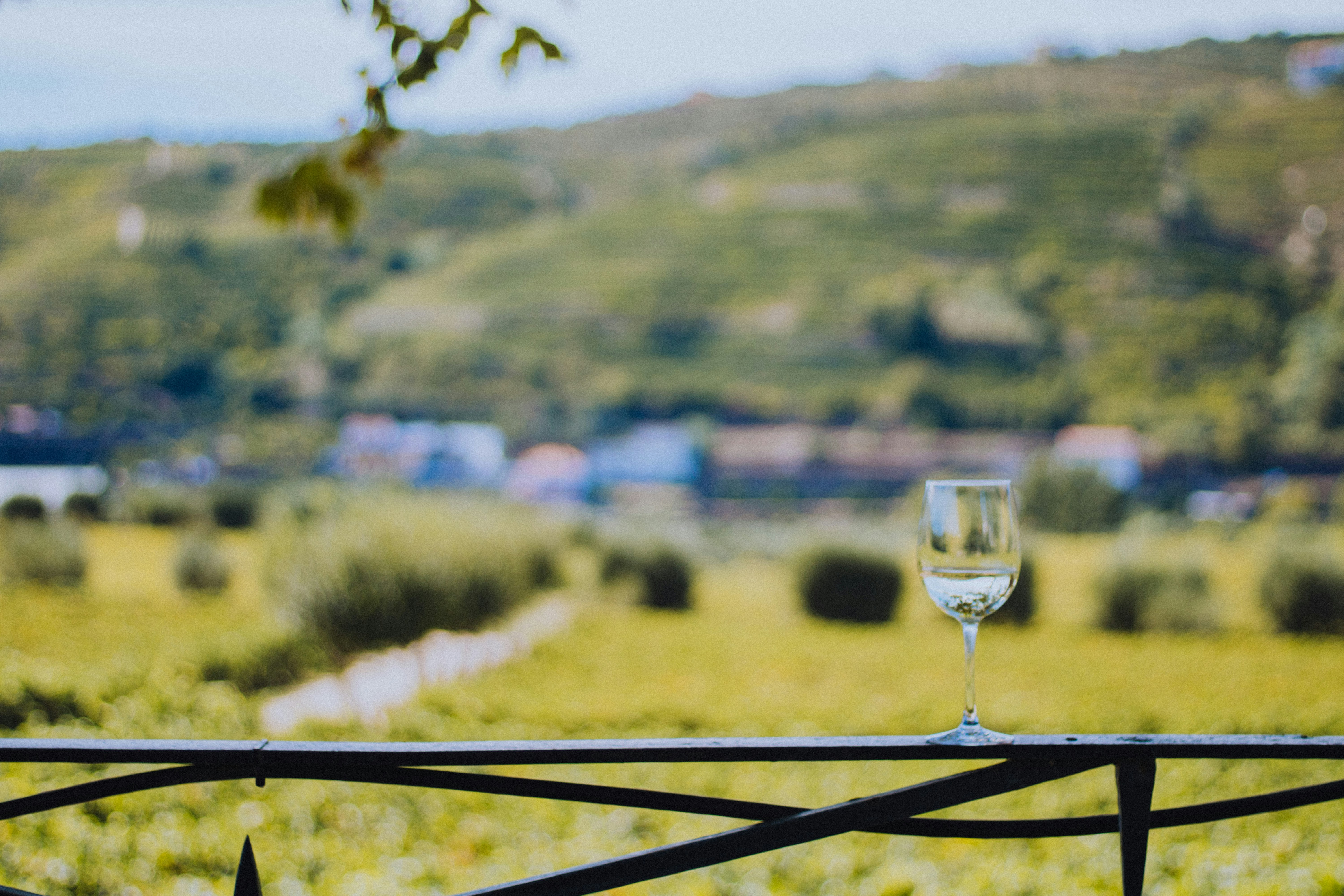
Few Portuguese wines are as widely recognized as Vinho Verde, and few are as often misunderstood. The name means green wine, but it refers to youth rather than color: the word verde here means young. Produced in the Minho region of northwest Portugal, bordering Spain, it is a wine of freshness, acidity and a gentle lift, and it has become a favorite of travelers who want a bright, easy companion for seafood and long lunches. This Vinho Verde guide explains where it comes from, how it is made and how to enjoy it.
Where Vinho Verde Comes From
The Vinho Verde region lies in the green northwest of Portugal and takes in the Minho area, including towns such as Braga, Guimarães and Viana do Castelo. The region was established by law in 1908, and the denomination was recognized as a DOC in 1984. Within it, nine sub-regions may appear on labels: Amarante, Ave, Baião, Basto, Cávado, Lima, Monção e Melgaço, Paiva and Sousa. Each reflects a slightly different corner of the landscape, and exploring them is a rewarding way to understand the wine.
What Makes It Green
Vinho Verde is traditionally drunk young, often within a few months of the harvest, which is why the name emphasizes youth. Typical alcohol levels sit between about 8.5 and 11 percent, while Alvarinho versions can reach roughly 11.5 to 14 percent. Many bottles show a slight fizz. This is not officially a sparkling wine, and many commercial examples gain their lift through added carbonation. As a general guide, taller, thinner bottles tend to carry the fizz, while rounder bottles typically do not.
Although white wine is the most common style, Vinho Verde also includes red, rosé, sparkling wine and aguardente. Red and rosé together account for roughly ten percent of production, and the reds can surprise visitors expecting only a pale, crisp white.
The Grapes to Know
Among the white grapes, Alvarinho and Loureiro are generally regarded as the most successful. Alvarinho is associated with low yields and with higher alcohol levels, and it is especially linked to the Monção e Melgaço sub-region in the far north. Among the reds, Vinhão, Amaral and Espadeiro are considered the best. A bottle labeled with a single grape variety is a good way to taste the differences, and a blend invites a more general impression of the region.
How to Taste and Serve It
Serve Vinho Verde well chilled, in a simple glass that lets the aroma gather. Look for citrus, green apple and floral notes, and pay attention to the acidity, which is the signature of the style. Because it is meant to be fresh, there is little reason to cellar it for long; choose a recent vintage and drink it while it is lively.
For travelers, a tasting in the region itself is the best education. Many estates welcome visitors, and a visit to the vineyards of the Minho gives context to the glass: the green slopes, the cool Atlantic influence and the rhythm of the harvest. Confirm opening hours and booking requirements directly with each producer before you go.
A useful habit when shopping is to read the label for the sub-region and the grape. A wine from Monção e Melgaço labeled Alvarinho will usually feel fuller and more aromatic, while a blend from a neighboring sub-region may feel lighter and more refreshing. Neither is better; they simply suit different moments, from an aperitif on a terrace to a long table of seafood.
What to Pair with Vinho Verde
The wine’s acidity makes it a natural partner for appetizers, salads, fish and seafood, white meat, sushi and sashimi. It also pairs well with pork and potato dishes, which suits the hearty cooking of northern Portugal. A glass beside grilled fish or a plate of shellfish is a classic and unfussy pleasure, and a bottle at the start of a meal can set a bright tone for what follows.
If you are traveling in the north, consider building a day around the wine: a morning in Guimarães or Braga, a lunch of regional dishes with a chilled bottle, and an afternoon among the vines. It is an easy way to connect the glass with the place it comes from, and it reflects the region’s own unhurried rhythm.
A Wine for Easy Pleasure
Vinho Verde rewards curiosity. Behind its reputation for simplicity lies a region of nine sub-regions, distinct grapes and a growing interest in quality and single-variety wines. For anyone building a Portuguese itinerary through the north, it is an invitation to slow down and taste the place.
Please confirm details such as visiting hours and availability with each estate or venue before planning your trip.