On the left bank of the Minho River, in the far north of Portugal, the walled town of Monção keeps a quiet secret beside its old fortifications: a historic thermal spa and a small, leafy park. For readers drawn to Portuguese spa towns, Termas de Monção, often called Caldas de Monção, offers a gentle chapter in the story of taking the waters, set among vineyards that produce one of Portugal’s most admired white wines. This guide brings together what is known about the spa, the park and the town around them.
A thermal tradition beside the river
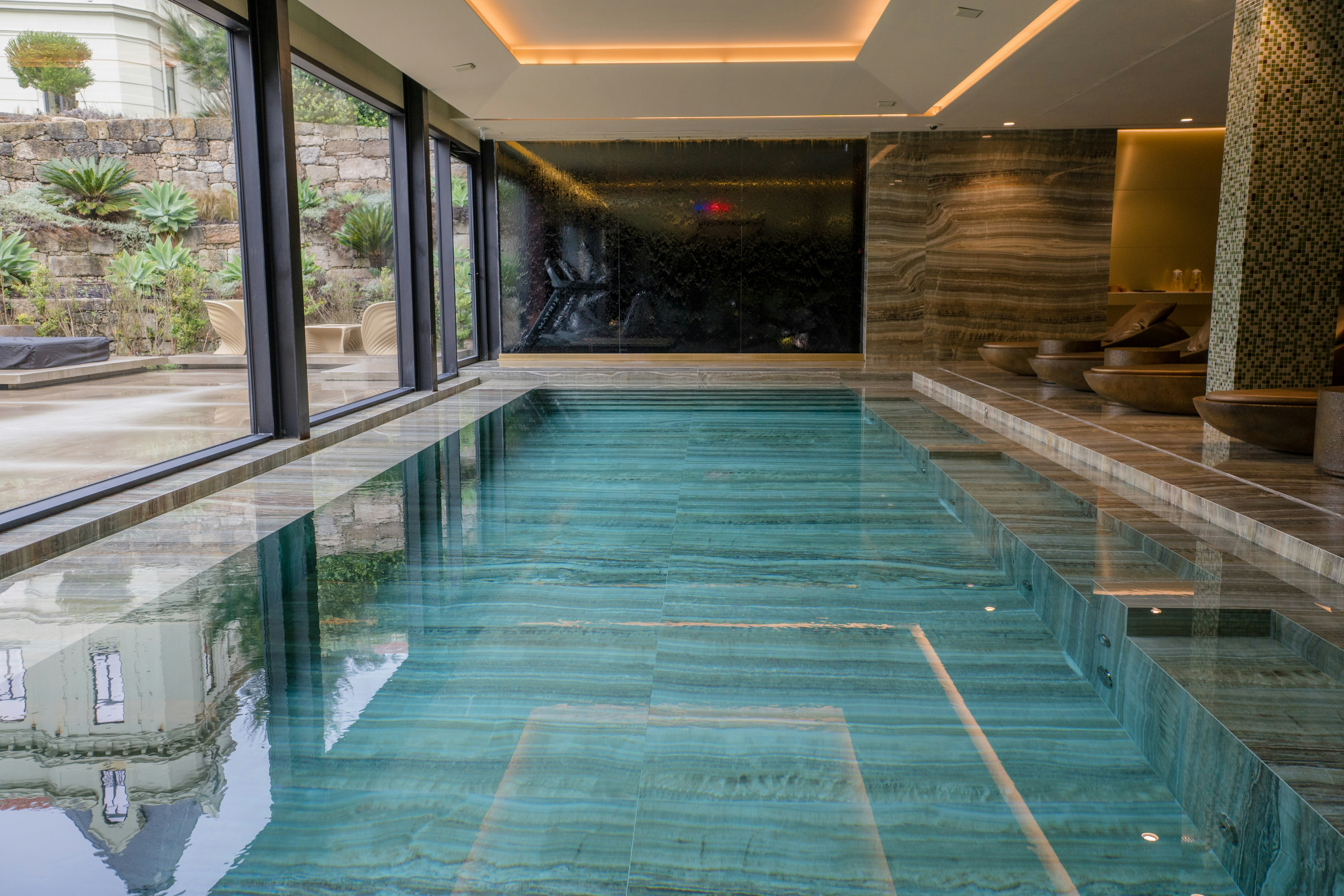
The thermal water at Monção has been used since the 17th century. The first spa building dates from the late 19th or early 20th century, and a newer spa was built in the 1990s, so today the site holds both an older spa building and a modern one. The facilities now sit in a 20th-century building, and the spa is described as offering a large public bathing area, Jacuzzis, a Turkish bath and a Roman-style bath.
This layering of eras is part of the charm. Many of Portugal’s thermal towns grew around a spring first valued in antiquity or the Middle Ages and were refined in the 19th century, when taking the waters became a fashionable pursuit. Monção follows that pattern in a quieter register, with a spa that has evolved rather than being reinvented, and a setting beside the river that gives the visit a calm, unhurried character.
The thermal park
Beside the town walls lies a small park known as the Park of Dr. António José de Pinho Júnior. An avenue of cedar and lime trees runs through it, connecting to the old spa building, with small resting areas along the way. It is not a grand garden but a considered one, and its scale is exactly what makes it pleasant: a place to walk slowly before or after a treatment, or simply to sit beneath the trees.
The park’s position, close to the old walls and the Minho, means that a short stroll connects wellbeing and heritage. The river forms the border with Spain, and the João Verde and Amador Saavedra Bridge, west of town, links Monção with Salvaterra de Miño in Galicia.
The town of Monção
Monção received its charter in 1261 from King Afonso III. Its best-known story dates from 1369, during a Castilian siege. According to the tale, the mayor’s wife, Deu-la-Deu Martins, gathered flour from the starving inhabitants and baked bread to send to the besiegers, convincing them that the town was well supplied. They withdrew. She is honored with a square named for her, Praça Deu-la-Deu, and a tomb in the Igreja Matriz.
Of the castle, little remains besides the tall, thin keep and a stretch of wall along the river. It was strengthened in the 17th century but fell to Spanish forces in 1659, during the Restoration War. Even in part, the remains lend the riverside a sense of history that complements the calm of the spa.
Alvarinho country
Monção is closely associated with Alvarinho, a grape variety used for Vinho Verde. The Museu do Alvarinho covers the history and production of the wine, and tasting it is described as one of the highlights of a visit. About 5 km south of the center stands the Palácio da Brejoeira, a 19th-century palace with 18 hectares of Alvarinho vines, an English-style garden with ponds, fountains and statues, a library and period furniture.
For a day built around restoration, the order is easy to imagine: a morning in the spa and park, a leisurely lunch in town, and an afternoon among the vines. Please check ahead for visiting arrangements at the palace and the museum, as access can vary.
A slow day in the Minho
The pleasure of a thermal town lies in its rhythm, and Monção suits a traveler who enjoys structure without hurry. Begin with a walk through the park beneath the cedars and limes, then take time for the spa, whether that means the public bathing area or the steam of the Turkish bath. Afterward, a pause on the riverbank, with the Spanish side of the Minho in view, helps the day settle.
In the evening, the town’s squares and narrow streets are well suited to a gentle stroll, and a glass of local Alvarinho is a natural companion to dinner. Because Monção is compact, it is easy to enjoy on foot, and an overnight stay allows the visit to feel like a retreat rather than an excursion.
Planning a visit
Monção lies about 70 km northeast of Viana do Castelo and 16 km west of Valença on the N101. Melgaço is 23 km west. By bus, the town is about 20 minutes from Valença, 40 minutes from Melgaço, one hour and twenty minutes from Viana do Castelo, one hour and forty-five minutes from Braga and two and a half hours from Porto. The journey to Lisbon by bus takes around six and a half hours, so many travelers combine Monção with a longer northern itinerary.
This piece is general cultural and travel information and is not medical advice. Anyone with a health condition, or who is pregnant, should consult a qualified professional before using thermal facilities. Opening hours, treatments and facilities change, so please confirm details with the spa directly before you visit.