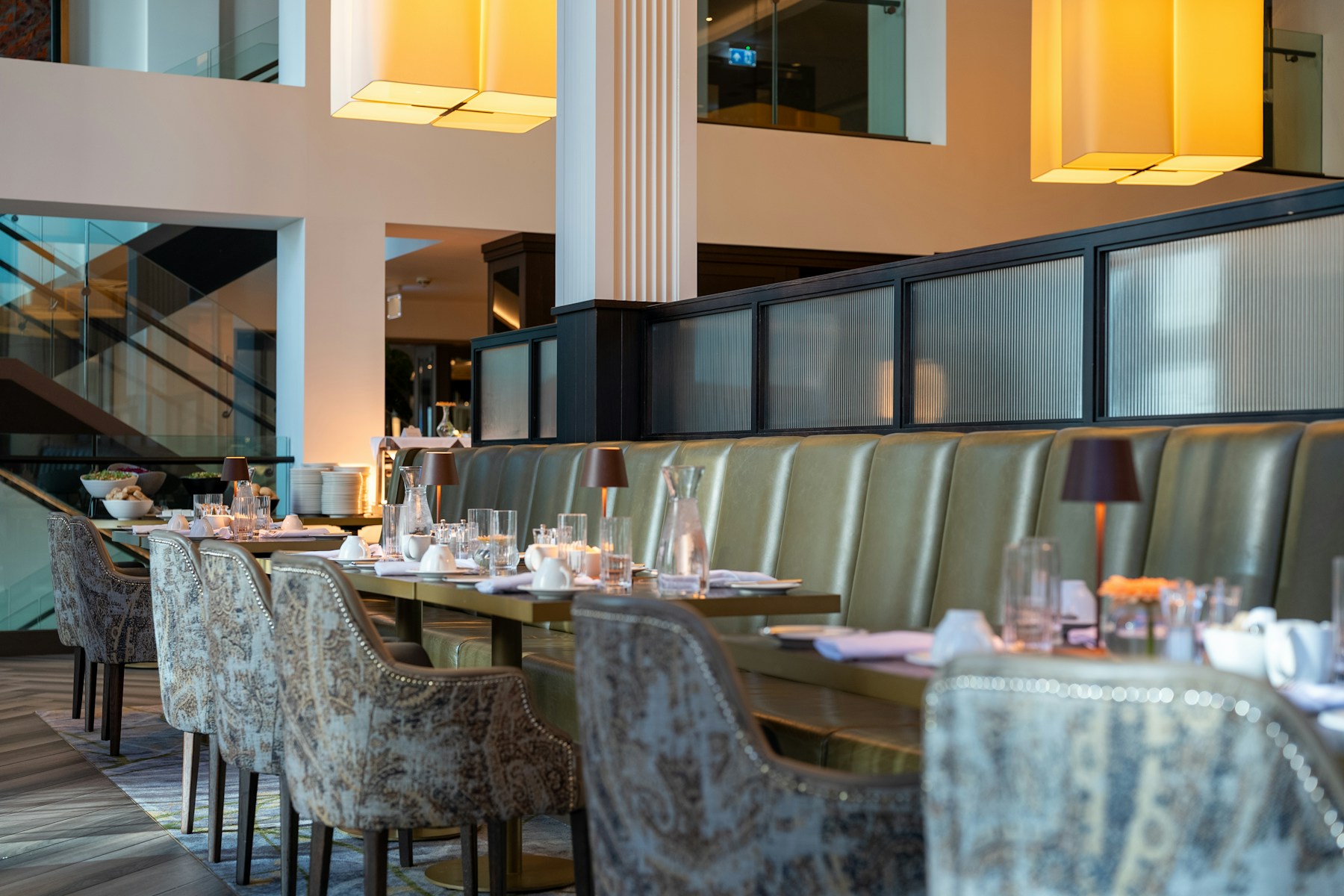

Portugal welcomes newcomers warmly, but it also notices how they arrive. For an international hotel, restaurant or lifestyle brand, the first impression in Lisbon, Porto, the Algarve or the Douro is rarely formed by an advertisement. It is formed by tone: whether a name seems to understand the place it has chosen, and whether it speaks about that place with respect.
Begin with Place, Not with the Brand
The most graceful entries into the Portuguese market begin by listening. Every region has its own character: the Atlantic polish of Cascais, the granite and river light of Porto, the slow horizons of the Alentejo, the terraces of the Douro. A brand that takes time to learn these distinctions tends to be welcomed as a guest rather than treated as an arrival from elsewhere.
The country’s own heritage supplies much of the vocabulary. Porto’s historic center, together with the Luiz I Bridge and the Monastery of Serra do Pilar, was inscribed by UNESCO in 1996 as the testimony of a European city oriented toward the sea for a thousand years. Upriver, the Alto Douro Wine Region covers some 24,600 hectares of steeply terraced vineyards, where wine has been made for roughly two thousand years. Place, here, is not a backdrop. It is the story.
This is where editorial thinking helps. Rather than lead with a message, a thoughtful brand begins with a story about the setting, the craft nearby, the produce on the table and the people who make the place what it is. The brand then becomes part of that story, not the other way around.
Language, Courtesy and Cultural Fluency
Portuguese hospitality values courtesy, understatement and craft. Communication that is overly loud or hurried can feel out of step, while communication that is precise, warm and a little restrained tends to travel well. Writing in clear Portuguese for local audiences, and in refined English for international ones, signals that a brand takes both seriously.
Cultural fluency also means knowing the calendar. Harvest in the Douro, the long summer season on the coast, the quieter shoulder months when residents reclaim their towns: each carries its own mood, and a brand that reflects them appears attentive instead of generic.
Local festivals offer a lesson in this. In Tomar, the Festa dos Tabuleiros takes place only every four years, when residents parade in pairs carrying tall crowns of thirty stacked loaves of bread, decorated with flowers. In Ponte de Lima, the Feiras Novas fill the second weekend of September, and in Viana do Castelo the Festa de Nossa Senhora d’Agonia is one of the country’s oldest and largest religious celebrations. A newcomer who understands these rhythms earns a quiet kind of credibility.
Let Reputation Grow at Its Own Pace
A new name does not need to be everywhere at once. In luxury hospitality, trust is built through consistent, quietly confident presence: considered features in respected publications, a clear point of view, and photography and writing that feel like they belong to the same world. Patience is a form of elegance, and guests who read carefully before they book tend to reward it.
Local relationships matter just as much as visibility. Suppliers, artisans, chefs, winemakers and neighbors give a property its texture, and their involvement is often the most credible story a brand can tell.
Portugal’s craft traditions show how this works in practice. Caldas da Rainha has long been known for its glazed pottery, and the town’s ceramic houses are woven into its identity. Such traditions endure because they are practiced season after season by people who belong to the place, and the brands that honor them tend to be remembered for it.
Why a Portuguese Base Helps
Working from within the country offers a practical advantage. A house based in Portugal, as Feast and Travel Media is, can see the market from the inside: how Lisbon differs from Porto, how the islands differ from the mainland, and how the same message needs a different register depending on where it is read. That perspective is difficult to replicate from a distance, and it shapes everything from which stories deserve telling to how quietly they should be told.
Differences of climate and light alone are considerable. Lisbon enjoys about 2,875 hours of sunshine a year, among the highest totals in Europe, while the green north around the Minho and the Douro has a different palette altogether. Telling those places accurately requires someone who has seen them in more than one season.
The goal is never to make a brand look local for its own sake. It is to help a newcomer express its character in a way the place recognizes and appreciates.
A Quiet Measure of Success
The best sign that a brand has entered Portugal well is not a launch moment. It is the day a guest describes the property to a friend using the language of the place itself: the light, the table, the people. When that happens, the brand has stopped being new and begun to belong.
For those who would enjoy a conversation about telling a hospitality story from a Portuguese base, we can be reached at partnerships@feastandtravelmedia.com.