Few borders in Europe feel as soft as the one that runs along the Minho River between northern Portugal and Galicia. This seven-day itinerary starts in Santiago de Compostela, the end point of the Camino de Santiago, travels south through Galicia’s Atlantic towns, crosses into Portugal at Valença, and finishes in Porto. It follows the same northwest corner of the Iberian Peninsula that pilgrims have walked for centuries, only with more comfort, better lunches and a room waiting each night.
Days One and Two: Santiago de Compostela
Santiago is the destination of the Camino de Santiago, and the Cathedral is the focus of the old town. Spend a day on foot among its stone streets and squares, watching pilgrims arrive. The Camino Portugués, which runs from Porto to Santiago, covers roughly 240 kilometers through northern Portugal and Galicia, and many travelers like to understand the route before they follow a section of it by car. In the evening, Galician cooking, with seafood and local wines, makes a warm welcome.
Day Three: Padrón and Caldas de Reis
Heading south, the first stops echo the Camino. Padrón is a town closely linked to the Jacobean tradition, and Caldas de Reis is a thermal town, whose hot springs have long welcomed travelers. A short soak or a quiet walk here is a restful way to begin the journey toward Portugal.
Day Four: Pontevedra
Pontevedra is in the heart of the Galician section of the Portuguese Way, and it makes an agreeable overnight stop, with a historic center that is easy to explore on foot. A late afternoon walk across the old stone bridge, the Ponte Sampaio, links the city to the story of the Camino and gives a sense of the long distances the route has always demanded.
Day Five: Tui, Valença and the Minho
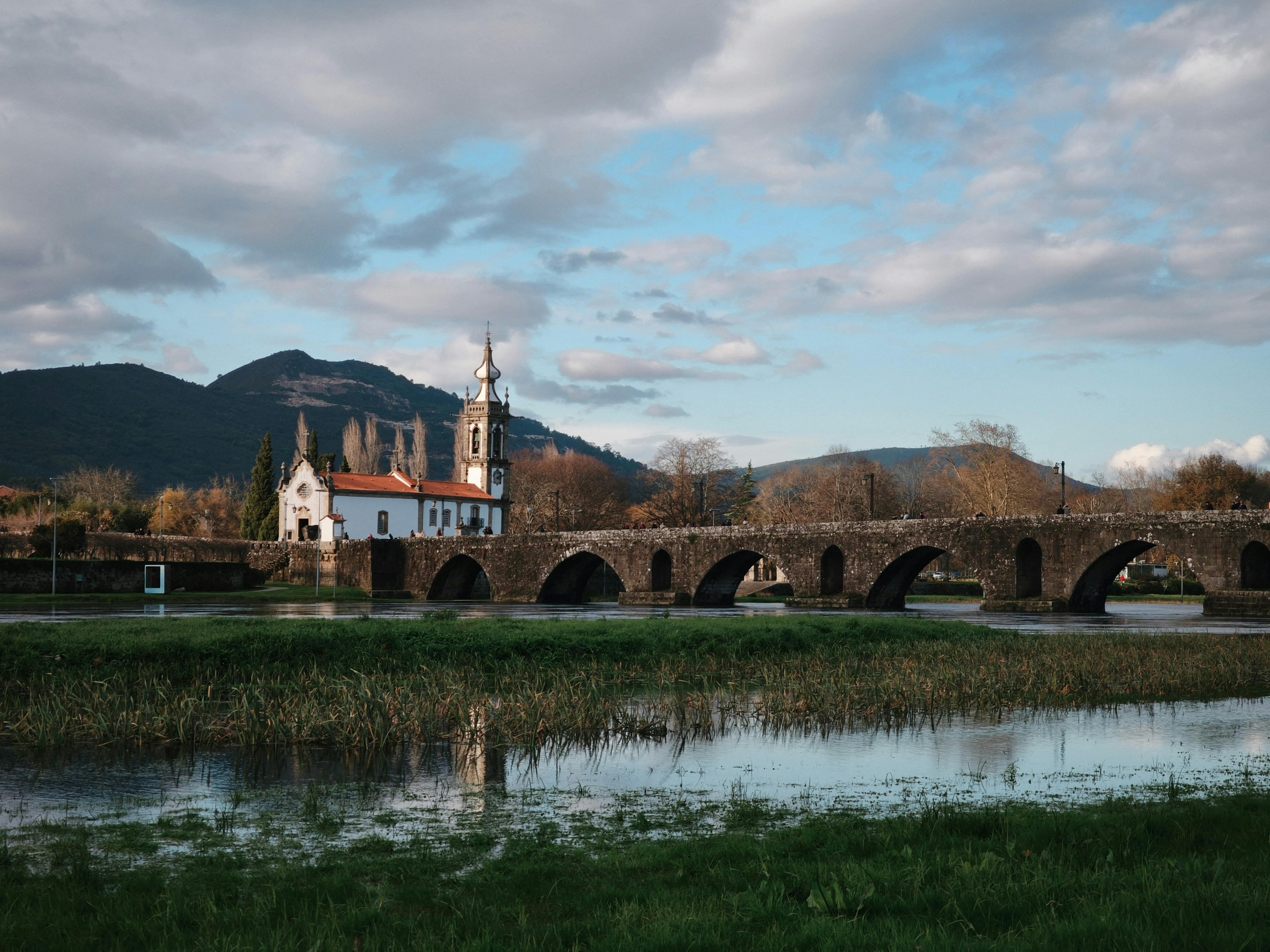
The border towns of Tui in Spain and Valença in Portugal face one another across the Minho River. Valença is the last stop in Portugal on the pilgrim route and Tui is the entry point into Galicia, so crossing the river on foot or by car feels like a small ceremony. Continue to Ponte de Lima, a town on the Lima River that sits among green farmland and quintas. Stay in a manor house if you can, and have a long dinner of local specialties.
Day Six: Barcelos and Braga
From Ponte de Lima, the route passes through Barcelos, described as one of the most representative towns on the Portuguese section of the Camino, before reaching Braga, a city known for its churches and gardens. Braga makes a graceful penultimate stop, particularly in the evening light. If time allows, add a detour toward Guimarães, the historic heart of northern Portugal.
Day Seven: Porto
The journey ends in Porto, where the Camino begins on the Portuguese side. The last day is for the city: the riverfront at Ribeira, the azulejo-lined São Bento station, the bookshops, and a glass of port in Vila Nova de Gaia. Porto is a fitting finale to a route that moves from cathedral to river to port.
Where to Eat and Drink
Galicia and northern Portugal share a coastline and a table. In Santiago and Pontevedra, seafood is central, from shellfish to grilled fish, with crisp Galician white wines. Across the border, the Minho is the home of vinho verde, the fresh, lightly sparkling white wine that suits shellfish and caldo verde alike. In Ponte de Lima and Braga, look for regional dishes, cured meats and sweets, and ask each host what is cooked well nearby. Because the region is small, you can taste both sides of the border in a single day.
A Gentle Pilgrim’s Day
For a taste of the Camino without the endurance, choose one short section of the route and walk it in the morning, perhaps between Valença and Tui or around Pontevedra. A driver can meet you at the end of the stage, and lunch is then very well deserved. Walking even a few kilometers helps to explain why this path has meant so much to so many people over the centuries.
Why This Route Works
This itinerary links two cultures that share a common landscape and many traditions. The stone, granite and Atlantic greens of Galicia continue into the Minho, and so does the food: seafood, caldo, cured meats and crisp white wines. The pace is gentle, with short drives, historic towns and thermal waters along the way.
Planning Notes
Spring and early autumn are especially pleasant, with mild weather and fewer crowds than midsummer. A private driver allows the route to feel effortless, and several manor houses and quintas along the way offer quiet, characterful rooms. As always, please confirm opening hours, hotel availability and local events with each venue before you travel. It is a trip that rewards patience, and it is much more than a transfer from one country to another.