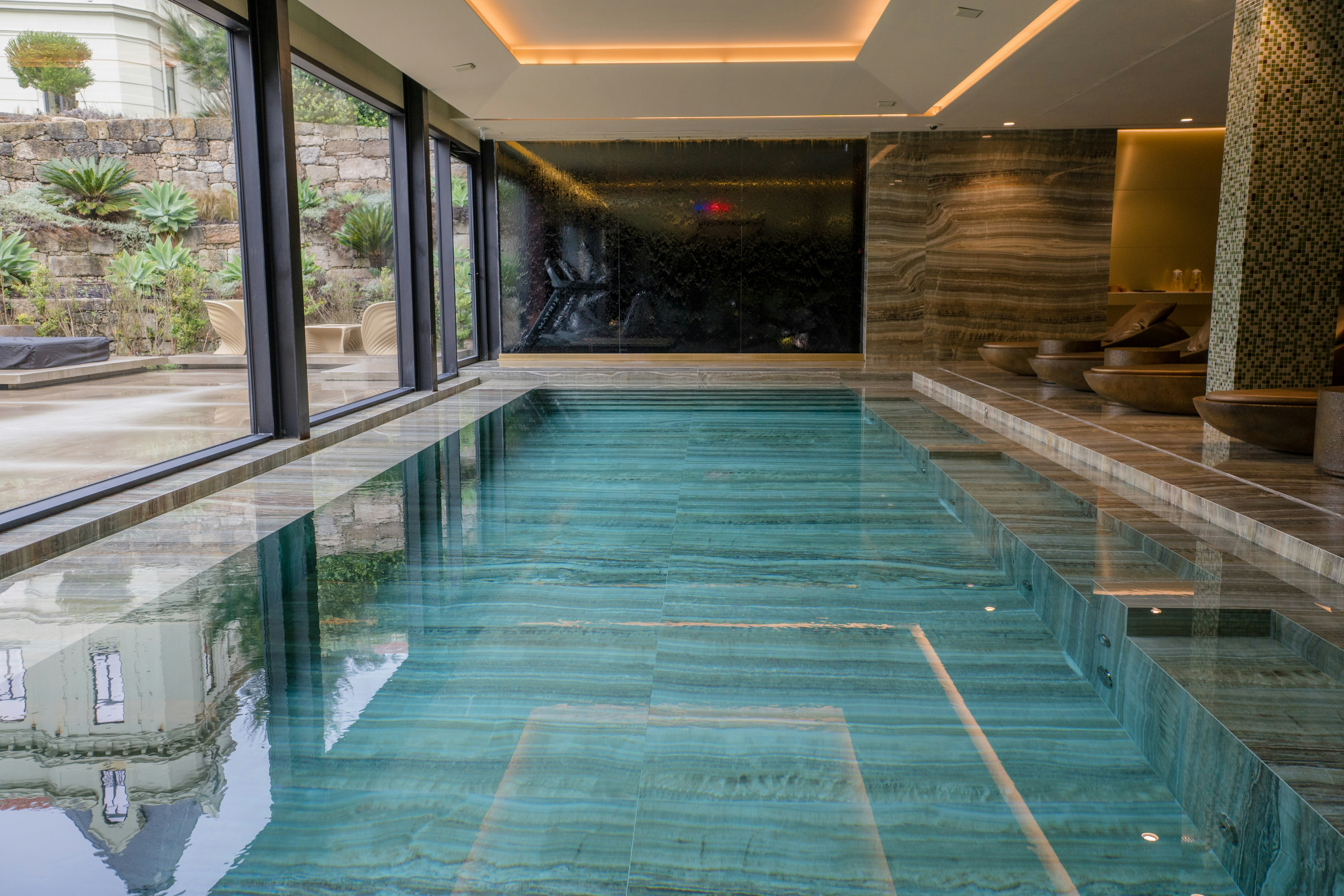
In the far northeast of Portugal, where the Beira Alta plateau meets the Upper Douro, a walled hilltop village looks out over vineyards, almond groves and olive trees. At its foot stands a nineteenth-century thermal building that has been given a second life as a hotel and spa. This guide to Termas de Longroiva looks at the setting, the architecture, the waters and the landscape around them, for readers who like their wellness quiet and rooted in place.
Where Longroiva sits in the Douro landscape
Longroiva is a village in the municipality of Mêda, in the district of Guarda. It belongs to the network of Historic Villages of Portugal, and the hotel’s own website speaks of its Templar heritage. The surrounding country is open and unhurried, with vines, groves and long views toward the Douro.
Thermal bathing has a long history in Portugal, and the Douro is part of it. A 2022 academic study of the region counts four thermal sites within the Douro Demarcated Region, Longroiva among them, and describes how renewing these spas supports the life of inland communities. Longroiva is a reminder that the Douro offers more than wine cellars and river cruises.
A thermal building reimagined by Luís Rebelo de Andrade

Beyond it, an enclosed bridge of timber and glass leads to a heated outdoor pool, and a line of newer rooms and bungalows steps up the hillside. The hotel lists twenty design rooms and ten bungalows alongside the historic rooms, for a total of 44 units. Wallpaper describes facades of stained timber inset with traditional Portuguese tiles that take on a golden sheen at sunset, with interiors that are restrained and furnished partly with locally made pieces. The best rooms, it notes, look over native vegetation, vineyards, almond and olive groves, and the sweep of the Douro.
The waters of Longroiva
Visit Portugal describes the water at Longroiva as sulphurous, bicarbonated and sodic. Visitors often remark on the mineral scent of sulphur and wet stone near the baths, which is part of the character of a traditional thermal town. Research on the site also describes the water being used as a geothermal resource, helping to heat buildings and sanitary water at the spa and hotel.
The experience is built around classic thermal treatments and wellness services, according to the tourism board for the Historic Villages. Time Out Portugal, speaking with the hotel’s director, mentioned a heated outdoor pool and an indoor pool filled with thermal water. Wallpaper adds that the spa waters were reportedly admired by the personal physician of King João V. As with any thermal spa, the programs and treatments available change, so please ask the spa what is currently offered.
A note on wellness: this article is for general interest only. It is not medical advice, and thermal treatments are not a substitute for professional care. Anyone with a health condition, or who is pregnant, should speak with a doctor before taking thermal baths.
The table and the surrounding country
The hotel’s restaurant presents the cooking of the Douro and the Beira, and the official site invites guests to enjoy it. Village guides also mention tigeladas, a sweet egg dessert baked in a clay dish that is associated with Longroiva. After a day of bathing, a simple regional meal feels like a natural conclusion.
The wider area rewards a slow itinerary. The Côa Valley rock art is inscribed by UNESCO and described as the most remarkable open-air ensemble of Paleolithic art on the Iberian Peninsula, with about 5,000 animal figures at Foz Côa. The hotel itself describes its position as close to two World Heritage sites. The medieval village of Marialva is also nearby, and the Douro vineyards stretch in every direction.
Planning a visit
A stay at Longroiva suits travelers who want a quiet interior destination with architecture worth noticing. It pairs well with a longer Douro itinerary that moves from the river towns to the high plateau, and with walks around the village walls. Plan a little extra time for the drive, since this is not a corner of the country reached in a hurry.
As always, details such as treatment menus, opening hours, accessibility and seasonal arrangements can change. Please confirm them with the hotel and spa directly before you travel.