Viseu rarely makes the first draft of a Portugal itinerary, which is part of its appeal. This Viseu travel guide covers a granite cathedral square, the paintings of the Renaissance master Grão Vasco, a walled old town that takes minutes to cross, an octagonal earthwork nobody has fully explained, and a tasting room for the wines of the Dão. The city sits on a high plateau in central Portugal, roughly two hours by road from Porto and three from Lisbon, and one full day is enough to see its highlights.
Adro da Sé: the square, the cathedral and the cloister
Begin at Adro da Sé, the square that holds the three buildings most visitors come for: the cathedral, the museum in the former bishop’s palace, and the white Igreja da Misericórdia, a rococo church dating to 1775. Standing in the middle, you see how much of Viseu’s character is carved in granite rather than painted on it.
Viseu Cathedral began to take shape in the 12th century, in the reign of Portugal’s first king, and has been rebuilt many times since. Two Romanesque towers survive from the original structure. The facade between them dates to the middle of the 17th century, built to replace a Renaissance front that collapsed in 1635, and it carries six niches of carved stone figures, among them Saint Teotónio, the city’s patron saint. Inside, the nave rises on tall columns, and the sacristy walls are covered in polychrome azulejos from the 17th century.
Ask for the cloister, which you reach through the church. Bishop Miguel da Silva, an early champion of Renaissance ideas in Portugal and a patron of Grão Vasco, had it built around 1539 to designs by the Italian architect Francisco da Cremona. The lower gallery keeps its Renaissance lines, the upper gallery was added in the first half of the 18th century, and 18th-century tile panels run along the walls. Upstairs, the chapter rooms have paneled Mudejar ceilings. The cathedral treasury holds two 13th-century reliquary chests from the Limoges school and a monstrance made in 1533 that belonged to Bishop Miguel da Silva.
Museu Nacional Grão Vasco and the painter Viseu claims
The Grão Vasco museum occupies the Paço dos Três Escalões, the 16th-century bishop’s palace attached to the cathedral, which later also housed a seminary. Its core is a group of paintings by Vasco Fernandes, who lived from about 1475 to 1542 and is known as Grão Vasco, and by his main collaborator, Gaspar Vaz. Many of the altarpieces were painted for the cathedral itself, which gives the visit a useful loop: see the building, then see what once hung inside it.
The collection continues well past the Renaissance, with canvases by Columbano Bordalo Pinheiro, José Malhoa and Silva Porto, plus sculpture, porcelain, furniture and jewelry. The building was extensively remodeled between 2001 and 2003, so the galleries feel current rather than dusty. Visit Portugal lists hours of 10 a.m. to 1 p.m. and 2 to 6 p.m., Tuesday through Sunday, with the museum closed on Mondays. Plan on about two hours.
The old town: gates, granite and Rua Direita

Branching off it, Rua Augusto Hilário is a lane of about 100 meters with Manueline windows and the house where the fado singer Augusto Hilário was born. Rua Escura is the one for looking up: Gothic gargoyles peer down from 16th-century houses. The lanes lead to Praça Dom Duarte, where a statue honors King Duarte, born in Viseu in 1391, and where the covered colonnade of the Passeio dos Cônegos, attributed to Francisco da Cremona, looks over the square.
Cava de Viriato and the green side of Viseu
A little over a kilometer from the cathedral, the Cava de Viriato is an octagonal earthwork of about 38 hectares, with a perimeter near two kilometers, and a national monument since 1910. Whether Romans, Moors or medieval Christians built it is still debated, and the name of the Lusitanian leader Viriato was only attached to it in the 16th century. A project led by the architect Gonçalo Byrne, begun in 2001, added a walkway along the slopes, so you can circle six of the eight sides under old trees, with views back toward the city. Beside it lies the field of the Feira de São Mateus, a centuries-old fair held in late summer.
Parque do Fontelo is the city’s other great green space, and it began as a bishop’s estate. Bishop Odório bought the Herdade de Fontelo in 1149, a palace followed from 1399, and the grounds reached their greatest period in the 16th century under Miguel da Silva. It is a public park now, and in July 2026 the procedure to classify the Parque e Jardins do Fontelo nationally was opened. Viseu has worn the label of Portugal’s garden city since 1935.
Dão wine and castanhas de ovos
Viseu is the main city of the Dão wine region, and the headquarters of the regional wine commission, the Solar do Vinho do Dão, also serves as the Welcome Center of the Dão Wine Route. It has a wine shop, an exhibition room and a tasting spot where eight different Dão wines are poured each week, and it arranges group tastings for up to 30 guests. Hours are limited, so confirm them before you walk over. For the granite soils and grapes behind those bottles, our Dão wine guide is the place to continue.
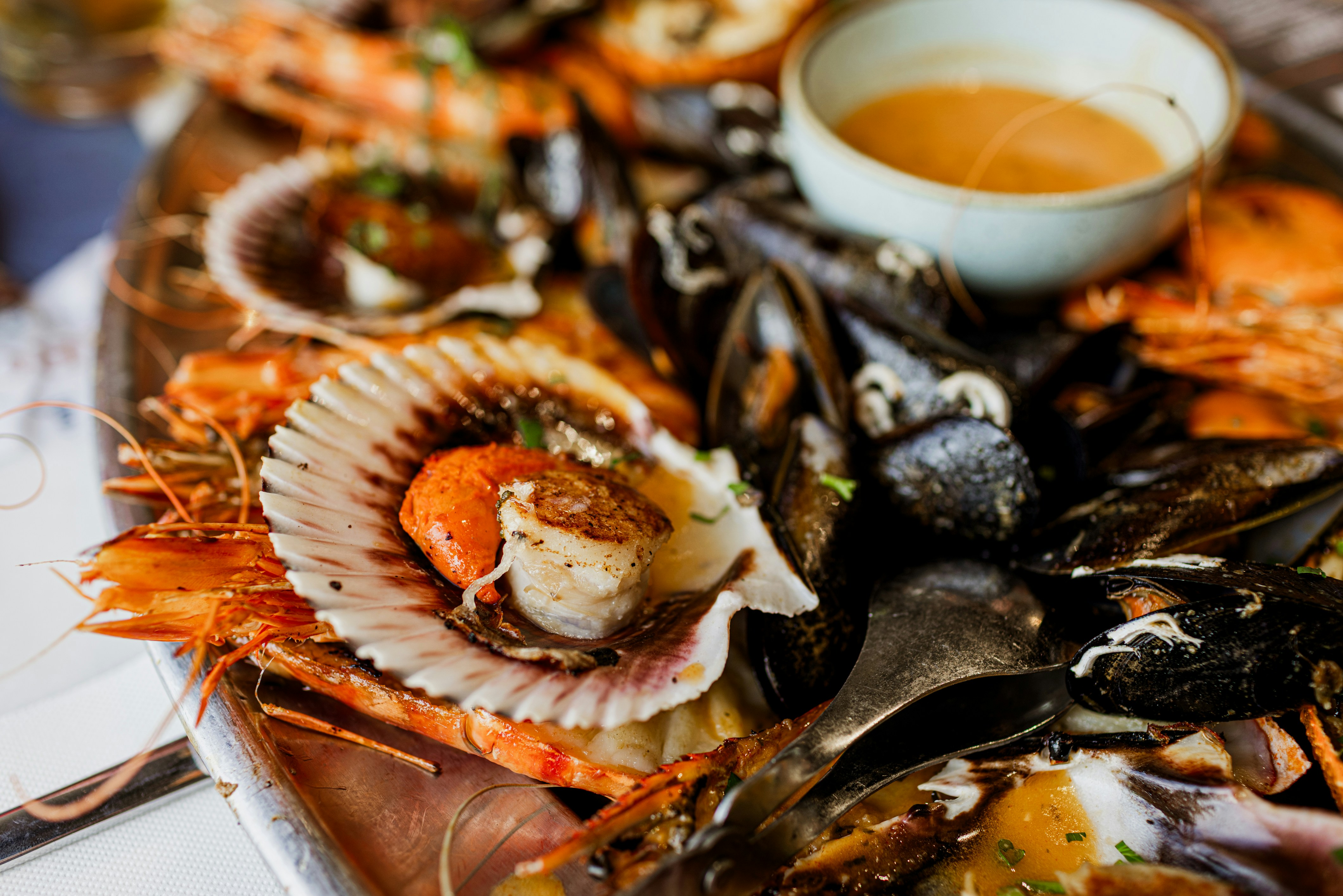
For something sweet, ask for castanhas de ovos, egg chestnuts made from sugar, egg yolks and flour and shaped like the nut. Viseu inherited the confectionery tradition of the Bom Jesus monastery, an exception in a part of Portugal where convent sweets are scarce, and a Portuguese press guide names the castanha de ovos, the Viriato pastry and cavacas as the three sweets of the municipality. If the story of yolk-based pastry interests you, read our guide to Portugal’s convent sweets.
Viseu travel guide: practical tips for one day
Viseu has no operating railway station, so buses are the dependable public option. FlixBus lists 13 direct departures a day from Porto, with a fastest journey of about 1 hour 50 minutes, and Rede Expressos also serves the city. From Lisbon, FlixBus lists about 3 hours 15 minutes. Driving takes roughly two hours from Porto and three from Lisbon. Check current timetables before you book.
Plan around the midday pause. The cathedral lists a break from noon to 2 p.m., and the museum closes from 1 to 2 p.m., so spend the morning on Adro da Sé and the afternoon on the old town, the Cava and the park. Spring and autumn suit wine country, and late summer brings the Feira de São Mateus. If you have a second day, many Dão estates are within a 20-minute drive of the city, and Lamego pairs well with Viseu. In the same district, the thermal town of São Pedro do Sul suits a slower stay.
Viseu questions, answered
Is Viseu worth visiting? Yes, for travelers who like a compact historic center with serious art. The cathedral, the Grão Vasco paintings and the old town sit within a few minutes of one another, which makes things to do in Viseu easy to combine in a single day.
How do you get to Viseu from Porto? By bus or car. The distance is about 80 kilometers, and the bus is the main public route because the city has no operating railway station.
How many days do you need in Viseu? One full day covers the highlights. Add a second day if you want to visit Dão wine estates outside the city.
What is Viseu known for? The Renaissance painter Grão Vasco, its cathedral square, Dão wine and its egg-yolk sweets. It also carries the garden city label.
Opening hours, schedules and tastings change, so confirm details with each venue before you go.